
“Peace has to be learned and practised” KAICIID brings dialogue into ASEAN peace education agenda

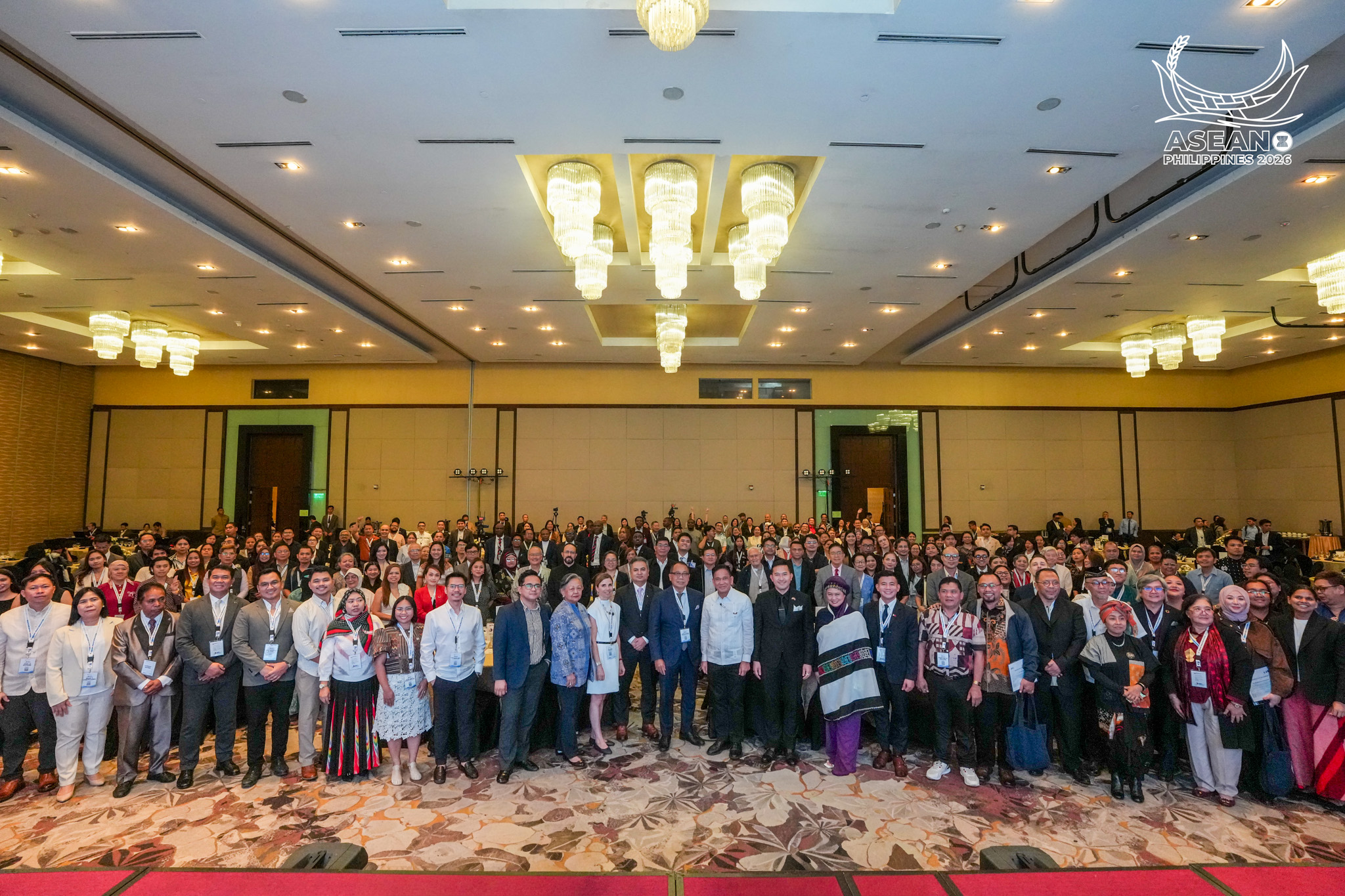
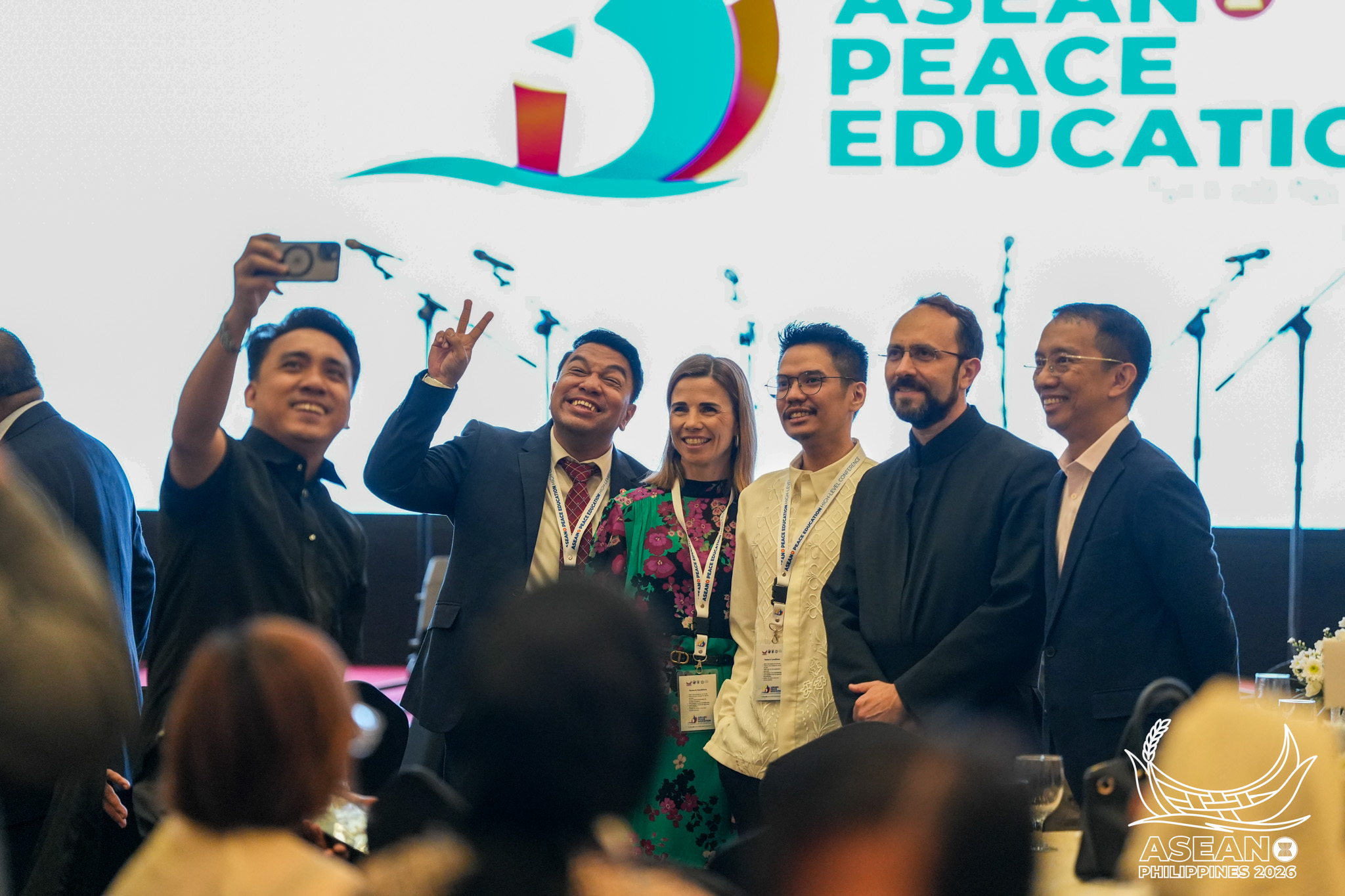
At the ASEAN Peace Education High-Level Conference in the Philippines, KAICIID joined policymakers, educators and youth advocates from across Southeast Asia to show how interreligious and intercultural dialogue can strengthen peace education.
Embedding peace education in academic curricula is vital to shaping the future of Southeast Asia.
This was the rallying call of Presidential Peace Adviser Secretary Mel Senen S. Sarmiento, who addressed more than 400 education leaders, policymakers, peace practitioners, academics, development partners and youth advocates at the ASEAN Peace Education High-Level Conference, held in Quezon City on 22 and 23 September under the theme “Peace Education for Shared Futures and Enduring Cooperation”.
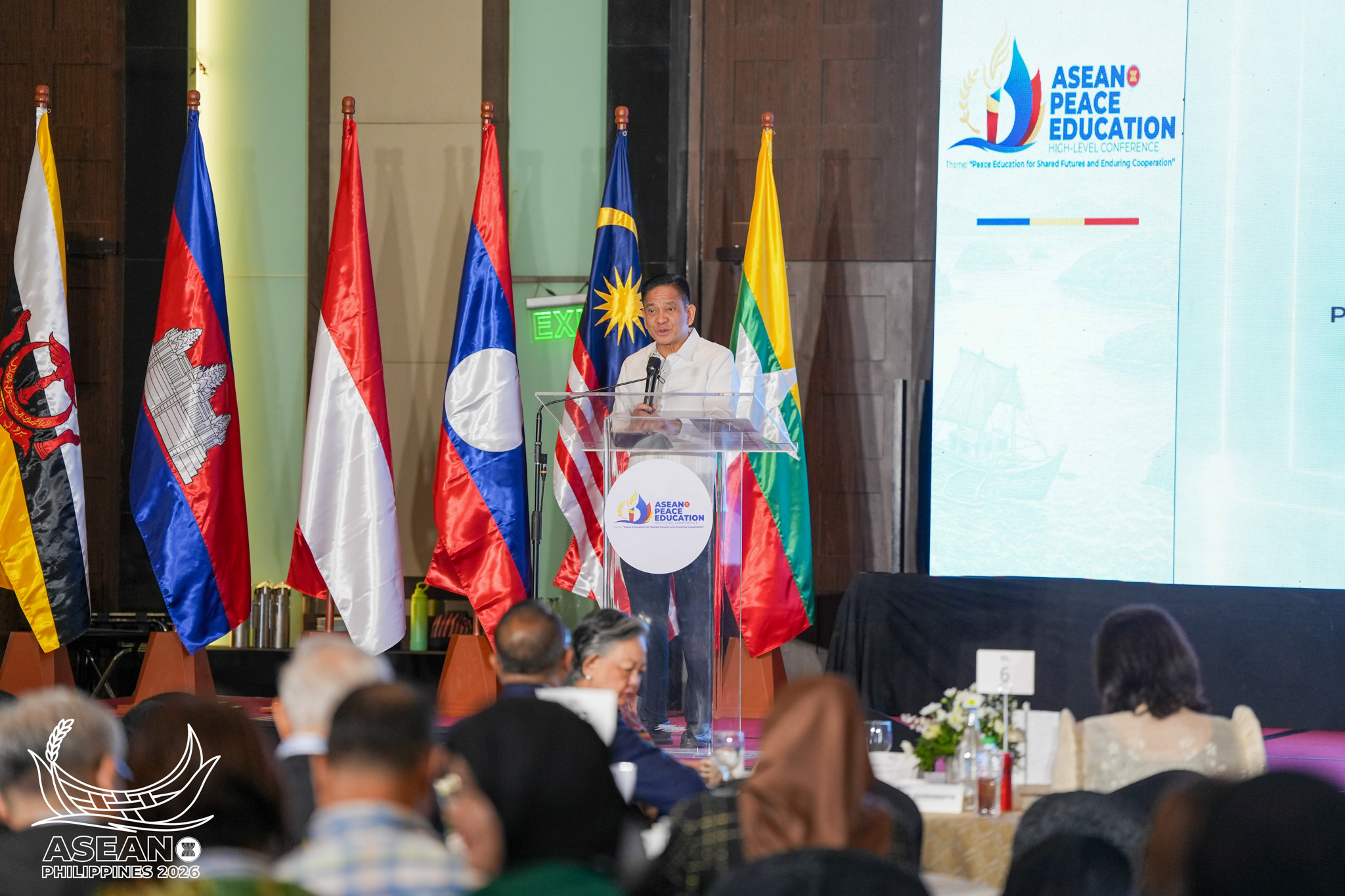
“We are different people, with different cultures and beliefs, yet we share one region and a common aspiration for a peaceful and prosperous future. And if we want that future, peace education cannot stop at the four walls of the classroom,” he said.
The conference took place as Southeast Asian societies face growing polarisation, misinformation and pressure on social cohesion. KAICIID used the gathering to advance a central idea: peace education must equip people not only to understand diversity, but to live with difference, build trust and work across religious and cultural lines.
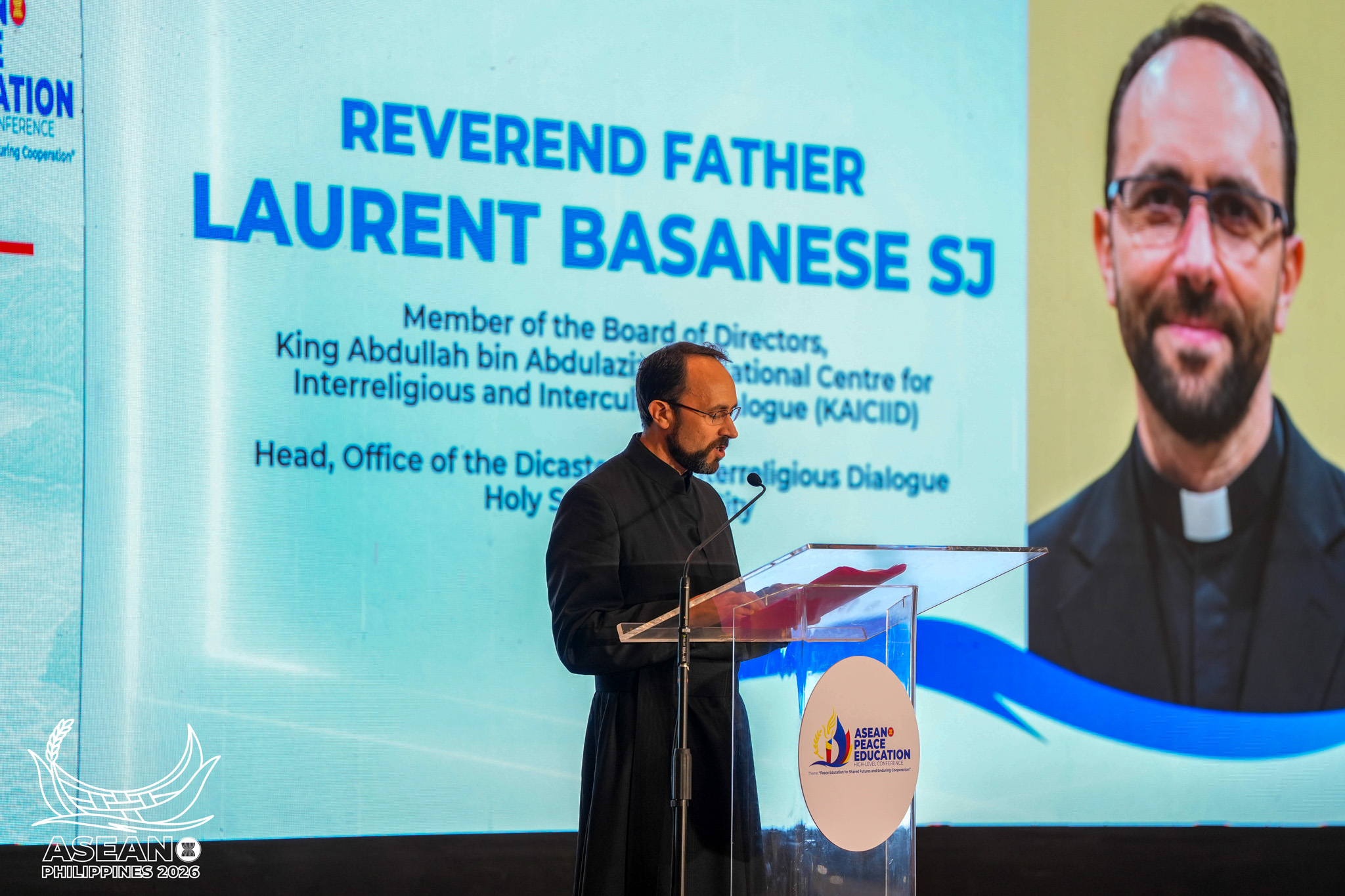
“Peace has to be learned and practised; it is an ongoing process that cannot be achieved only through political agreements, however necessary they may be,” stated Rev. Father Laurent Basanese S.I., a member of KAICIID’s Board of Directors and Head of Office at the Holy See’s Dicastery for Interreligious Dialogue, in his keynote address.
From diversity to dialogue
“Peace education cannot simply teach that diversity exists. It must teach us how to live with diversity,” Father Basanese said.
For KAICIID, dialogue is not limited to formal encounters between religious leaders. It is a practical competency that can be learned, taught and built into education: listening before responding, distinguishing what another person actually believes from assumptions about them, and moving from accepting difference towards genuine encounter and cooperation.
“Respect allows us to live peacefully alongside one another. Dialogue enables us to build relationships. And relationships build trust,” he said.
This conviction underpins KAICIID’s education work, which spans curriculum development, teacher training and the International Fellows Programme, which has supported more than 580 Fellows from over 100 countries since 2015. In the Central African Republic, the Centre supported an interreligious dialogue module within the Conflict Resolution Master’s programme at the University of Bangui. In Nigeria, Seychelles and Mauritius, it partnered with Arigatou International on an Ethics Education Fellowship for teachers.
Bringing peace education into institutions
In the Philippines, KAICIID is working with the Philippine Center for Islam and Democracy (PCID) to integrate an interreligious and intercultural dialogue curriculum guide into the Peace Education course at Mindanao State University. The partnership matters in Mindanao, where questions of religion, identity, education and peacebuilding are closely connected.
This engagement builds on KAICIID’s cooperation with the ASEAN Institute for Peace and Reconciliation (ASEAN-IPR). Since the two institutions signed a Memorandum of Understanding in 2023, more than 75 ASEAN officials have been trained in interreligious and intercultural dialogue for peacebuilding. The Office of the Presidential Adviser on Peace, Reconciliation and Unity (OPAPRU) hosted a regional training in Manila in 2025.
At the conference, Vera Ferreira, Head of Regional Programmes, moderated the panel Bridging Cultures, Faiths, and Communities: Intercultural and Interfaith Dialogue through Peace Education, and the Centre hosted a session on putting dialogue into practice as an approach to peacebuilding.
Fellows putting dialogue into practice
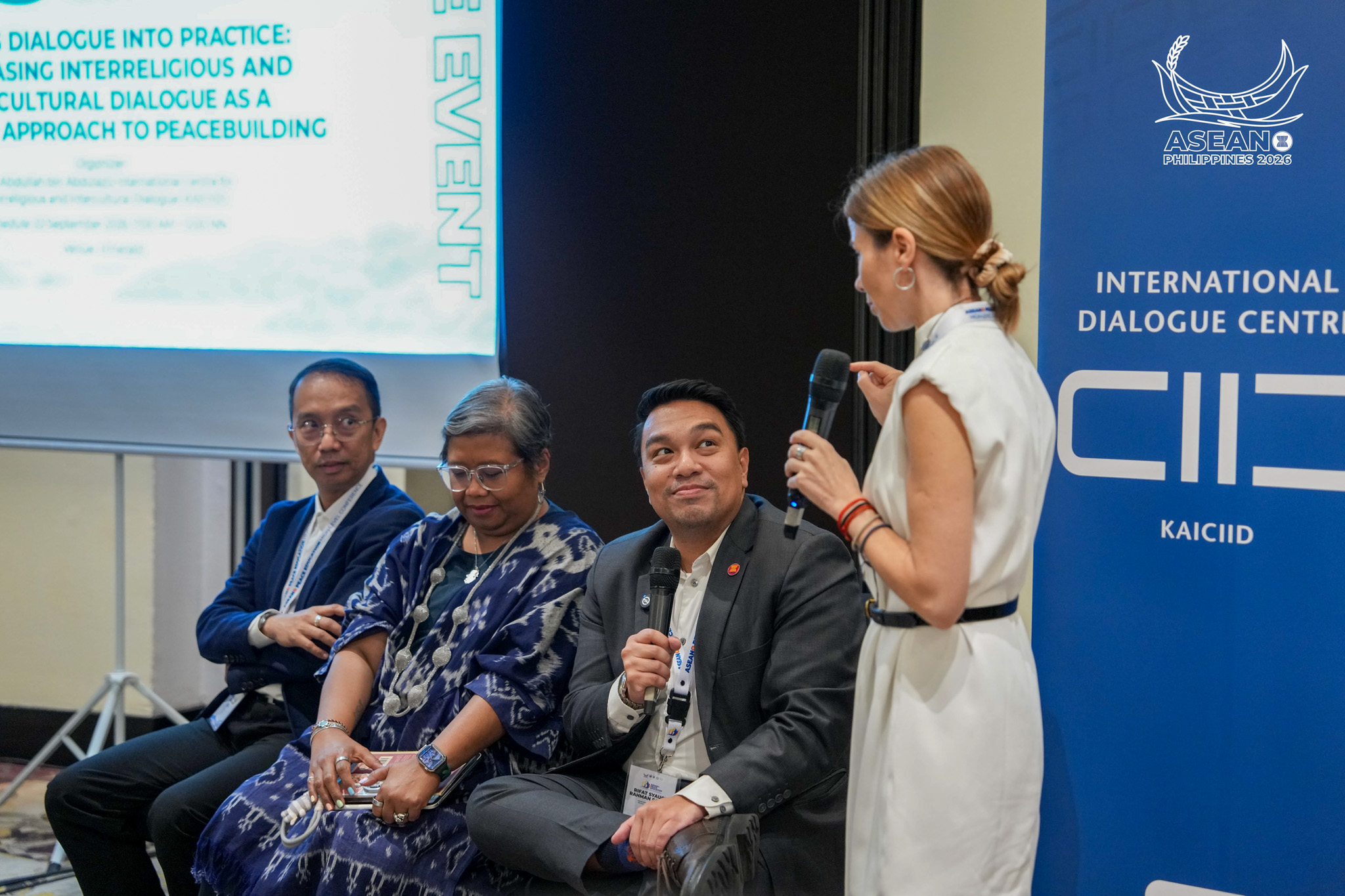
Four KAICIID Fellows brought direct experience from regional institutions, universities and communities.
Rif’at Fachir of Indonesia is Communications Officer at ASEAN-IPR and a member of KAICIID’s 2022 South and Southeast Asia cohort. Dr Ridwan al-Makassary lectures at Universitas Islam Internasional Indonesia, with a background in peace studies, conflict resolution and interfaith studies. Datu Mussolini Sinsuat Lidasan, Executive Director of the Al Qalam Institute for Islamic Identities and Dialogue in Southeast Asia at Ateneo de Davao University, works on interfaith and intra-faith dialogue and conflict transformation in Mindanao.
Kenny Lloyd Angon, the Institute’s Assistant Director, helped establish the Southeast Asian Youth for Humanity (SEA Y4H) network in 2023 and was the first Filipino selected for a youth-focused cohort of the Fellows Programme.
“Our young people are not merely passive witnesses to this work,” he said. “They are the active storytellers, peacemakers and bridge-builders who transform diverse traditions into a foundation for collective harmony.”
For Father Basanese, that practical dimension is essential. Young people of different religious and non-religious convictions, he said, should work together on issues that concern their communities.
“When we act together, something important happens. The person whom I previously knew only as ‘the other’ acquires a name, a face and a story. And peace begins precisely there.”
From a volunteer facilitator in Bangkok to…
Communities suffer, not only from the echoes of broken men…
Peacebuilding today requires more than technical solutions; it demands inclusive, values…