Faith, Dignity and the Urgency to Act: Why Religious Leaders Must Join the Global Fight Against Child Labour

Despite extraordinary technological progress, an estimated 138 million children remain in child labour. Many are working in fields, factories and mines instead of being in school, safe at home, or simply being children.
This is not only a development failure. It is a moral one.
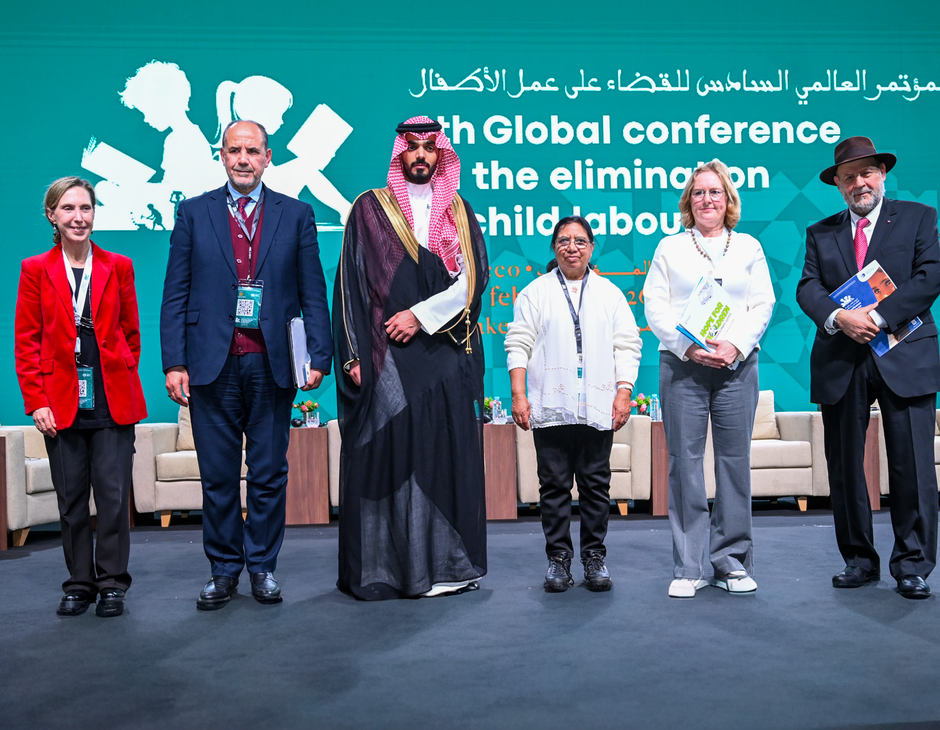
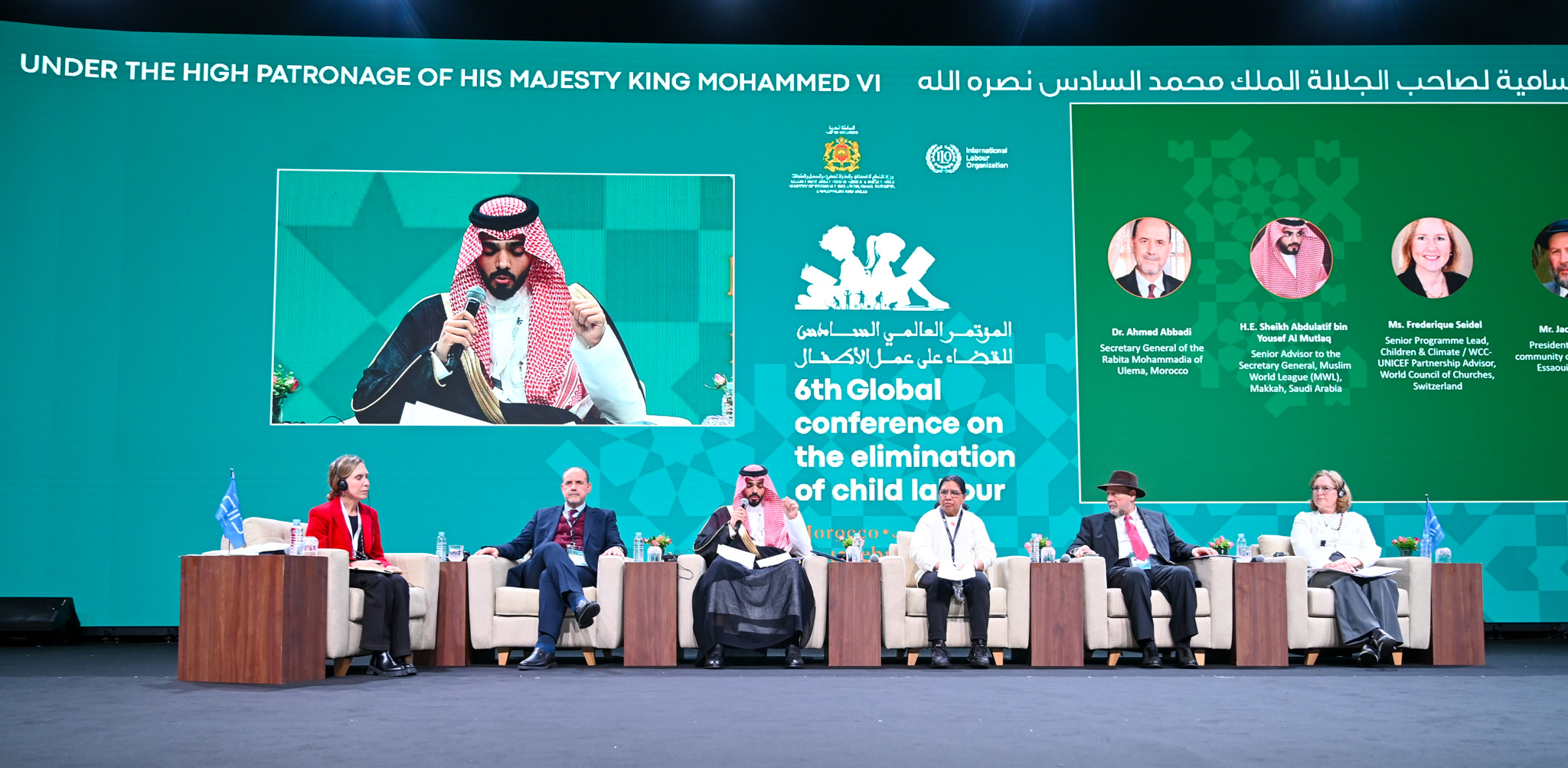
On the margins of the International Labour Organization’s Sixth Global Conference on the Elimination of Child Labour in Marrakech, the International Dialogue Centre - KAICIID, together with the Permanent Mission of the Kingdom of Morocco in Geneva and under the patronage of the Kingdom of Morocco, marked the conference by gathering religious leaders and faith-based actors under a unified purpose: child labour is not merely a policy issue., it is a moral imperative.
Human dignity is not negotiable
Across the Abrahamic traditions, Islam, Christianity and Judaism, humans being must never be treated as a means to an end.
In Islam, the preservation of life and dignity is a core objective of divine law. The Prophet Muhammad taught that he was sent to perfect noble character, placing ethics at the heart of faith. The Makkah Document, advanced by the Muslim World League and endorsed by leading scholars, affirms that caring for children, their health, education and moral development, is a primary responsibility of families, institutions and states. Through this lens, child labour is not simply hardship. It is a breach of sacred trust.
Christian leaders have voiced the same urgency, grounded in the conviction that protecting the vulnerable is central to faith. Judaism similarly affirms that every child is created in the image of God and therefore entitled to justice and protection.
The message is shared: dignity is not negotiable.
From compassion to collective responsibility
Faith communities are often among the first to respond when children are exploited. In many contexts, KAICIID Fellows and interreligious partners work within local communities, engaging imams, rabbis, priests and educators to challenge harmful norms, promote education and strengthen child protection awareness.
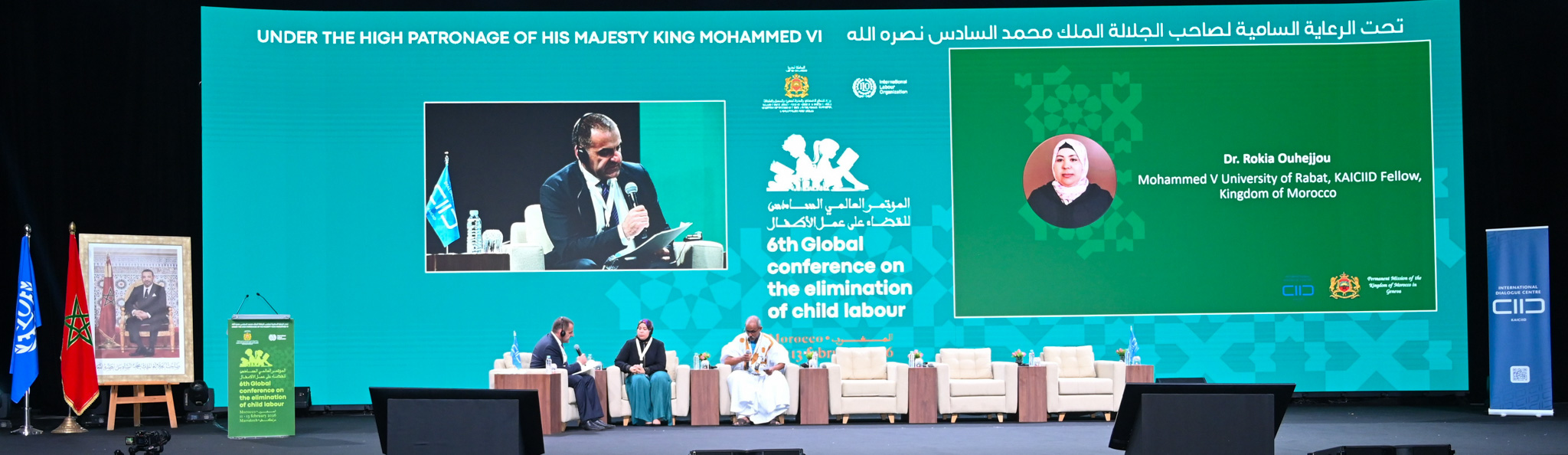
Muslim scholars and councils have increasingly framed child labour as a violation of ethical and religious obligations. Institutions such as the Muslim World League have emphasised that religious leadership carries responsibility not only for spiritual guidance, but also for social protection. When sermons speak about dignity, justice and mercy, they shape community actions.
Catholic networks such as Talitha Kum, a global anti-trafficking initiative present across 90 nations led by religious women, has continuously worked since 1998 to prevent trafficking across borders, protect survivors and address systemic drivers, including poverty and lack of access to education, pushing children into forced labour and exploitation.
But as speakers stressed during the KAICIID-convened dialogue, compassion alone is not enough. The challenge is to move from moral concern to structured, sustained commitment.
Addressing the root causes
Child labour cannot be eliminated without tackling its structural drivers.
Climate change is one of them. When drought destroys crops or floods displaces communities, children are often the first to leave school and enter work. Poverty, environmental degradation and weak governance combine to increase vulnerability and enable exploitation.
Corporate accountability is another critical dimension. The Durban Call to Action, adopted at the preceding ILO Conference, underscored that supply chains must not become moral blind spots. Religious leaders across traditions are increasingly speaking about ethical finance, responsible investment and economic models that put children’s wellbeing before profit.
In many settings, faith leaders are linking long-standing teachings on fairness and justice in trade with contemporary debates on responsible business conduct. These are not imported ideas. They are rooted in ethical traditions that communities already recognise and trust.
KAICIID’s role: from dialogue to action
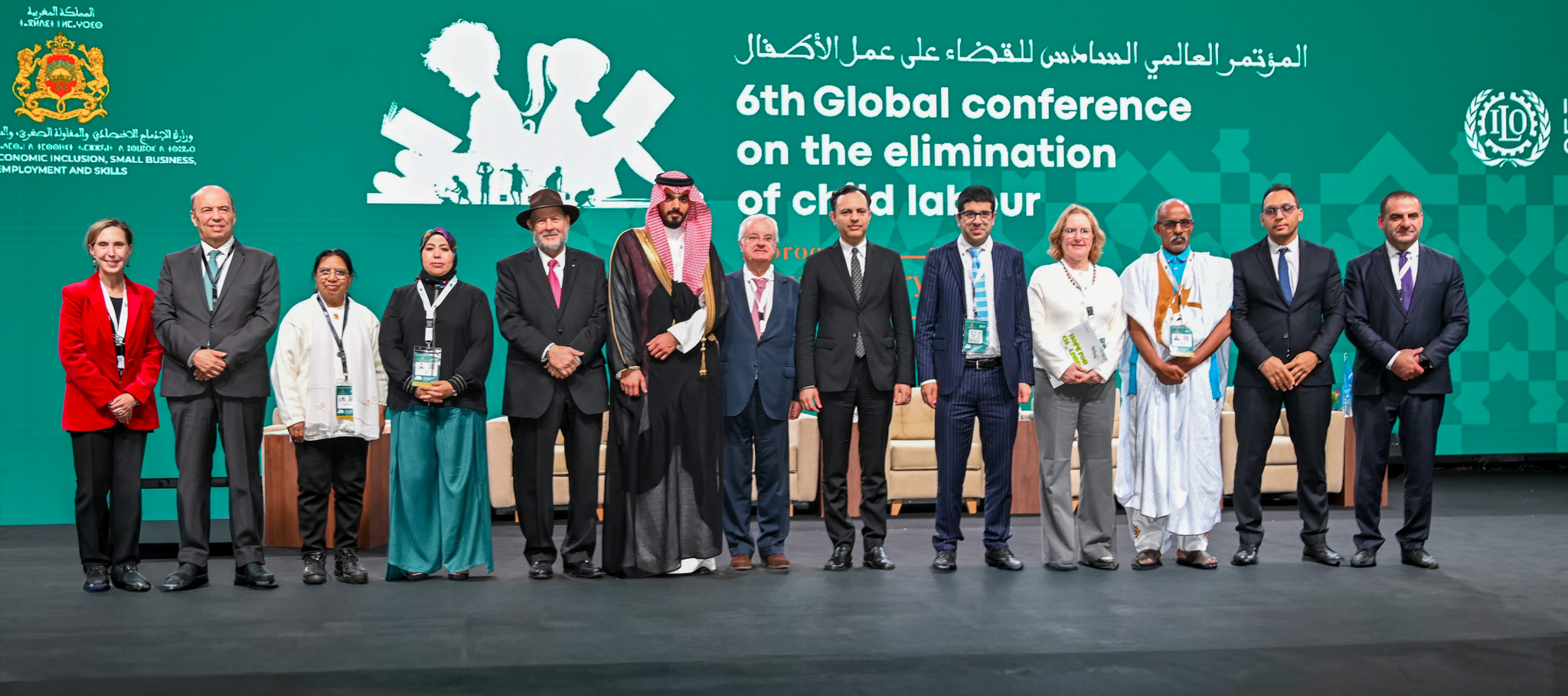
What makes this moment significant is not only what faith leaders are saying, but how they are being brought together.
KAICIID’s role as a convener helps turn dialogue into practical cooperation. By creating space where senior religious authorities, policymakers and international organisations can engage as peers, shared values can be translated into prevention approaches, community-level commitments and policy choices.
When religious councils, global networks and grassroots actors sit with institutions such as the ILO, prevention becomes more locally grounded. Policies gain moral legitimacy. Communities gain ownership.
Interreligious cooperation is not optional. It is necessary.
Why Alliance 8.7 must have faith leaders
Alliance 8.7, the global partnership to end forced labour, modern slavery and child labour, is strengthened by meaningful engagement with faith actors. Religious leaders influence attitudes, family decisions and community norms. They can champion education for girls and boys, challenge exploitative practices and promote social solidarity. They can also reinforce calls for fair economic systems and accountable governance.
But they must be included as strategic partners, not symbolic endorsers.
The fight against child labour will not be won by economic measures alone. It will require moral clarity, policy coherence and community mobilisation working together.
KAICIID’s governance model, which brings together Member States and religious leaders, shows why structured engagement between faith communities and policymakers matters when addressing complex global challenges. Expanding the involvement of religious leaders within platforms such as Alliance 8.7 can help translate shared ethical commitments into tangible progress.
Because every child’s dignity is sacred. Protecting that dignity is not only a policy objective. It is a faith responsibility.
![[file:field-file-image-alt-text]](/sites/default/files/styles/project_image/public/img_4414_copy_2_0.jpg.webp?itok=Cq1-qCbE "The Role of Religious Leaders in Preventing Incitement that could lead to Atrocity Crimes")