
KAICIID hosts EU Diplomatic Corps in Lisbon for roundtable on dialogue, peace and social cohesion

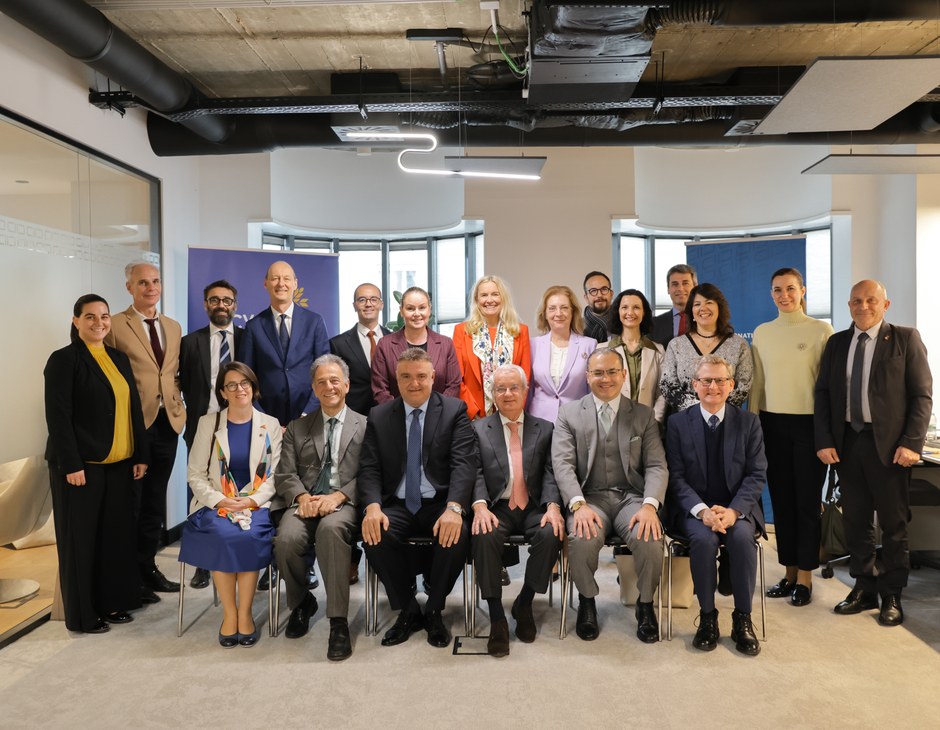
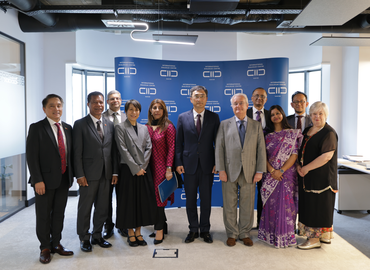
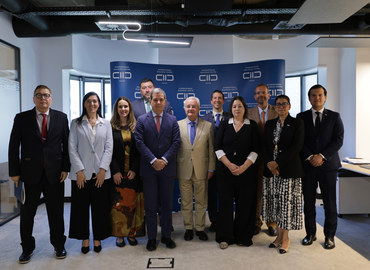
The International Dialogue Centre - KAICIID welcomed representatives of the European Union Diplomatic Corps accredited to the Portuguese Republic for an Ambassadorial Roundtable on “Transformative Dialogue Approaches for Peace and Social Cohesion” at its headquarters in Lisbon. The meeting provided space for an open exchange on how dialogue, including interreligious and intercultural dialogue, can help prevent tensions, strengthen trust, and support more cohesive societies.
The roundtable was convened in the framework of the Rotating Presidency of the Council of the EU, currently held by Cyprus. Organised with Ambassador Elpidoforos Economou of the Republic of Cyprus, the event also featured opening remarks from Council of Parties representatives from the Republic of Austria and the Kingdom of Spain. Diplomatic representatives were introduced to the Centre’s mandate and programmes across Europe and other regions, with a particular focus on work that connects policy priorities with community-level realities in Europe.
“At KAICIID, we are convinced that sustainable peace depends not only on relations between states, but on trust within societies. When diplomacy and dialogue work together, they can create resilient pathways to prevent conflict, address grievances and rebuild social cohesion,” said Ambassador António de Almeida Ribeiro, KAICIID Acting Secretary General.
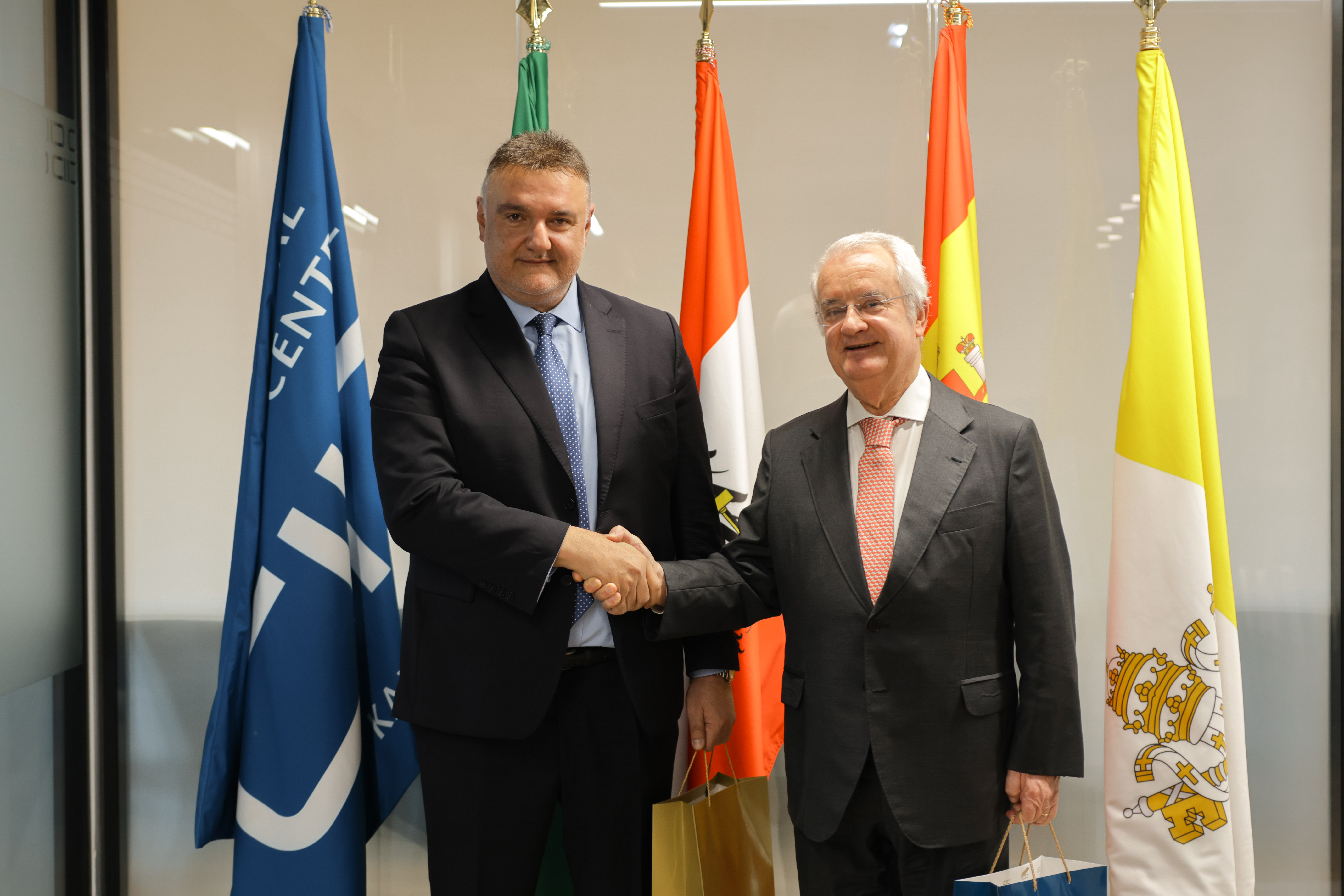
“The strength of our Union lies in its people and in the active involvement of every European. An autonomous Union leaves no citizen behind: it exists to protect our shared values, empower participation, and create an enabling environment in which all can thrive.” Said Ambassador Elpidoforos Economou, Ambassador of the Republic of Cyprus to the Portuguese Republic
KAICIID remains committed to bridging the gap between policy-making and the transformative power of interreligious and intercultural dialogue. The Centre stands ready to support the Presidency’s commitment to an “Autonomous Union of values” that leaves no one behind.
Throughout the exchange, participants reflected on the role of dialogue in addressing deep-seated inequalities and discrimination rooted in religious, social, economic, political, and cultural divides. The discussion explored practical approaches that help build resilience against division, exclusion, and the misuse of religion to justify hatred and discrimination, underlining the importance of trusted interlocutors and safe spaces for conversation.
The roundtable also highlighted KAICIID’s experience in convening multi-stakeholder platforms and providing tailored training and support for faith and community actors, civil society, and institutional partners. In Europe, the Centre’s work focuses on strengthening social cohesion and helping bridge the gap between policy discussions and local realities, in cooperation with a wide range of governmental and non-governmental partners. KAICIID’s Europe region covers the geopolitical space corresponding to the 46 countries of the Council of Europe, a vast region that is increasingly multireligious and multicultural. The Centre’s work harnesses interreligious and intercultural dialogue as effective approaches to strengthen social cohesion, support reconciliation, and address environmental challenges that are increasingly testing Europe’s social fabric.
During the roundtable, KAICIID’s Senior Programme Manager for Europe, Teresa Albano, presented the Centre’s “Dialogue to Action loop” approach, which combines high-level engagement with policymakers and religious leaders with grassroots empowerment of communities. Participants were introduced to flagship initiatives such as the Muslim-Jewish Leadership Council and the Network for Dialogue, which demonstrate how interreligious and intercultural dialogue can translate into concrete local action to counter polarisation, discrimination, and social fragmentation.
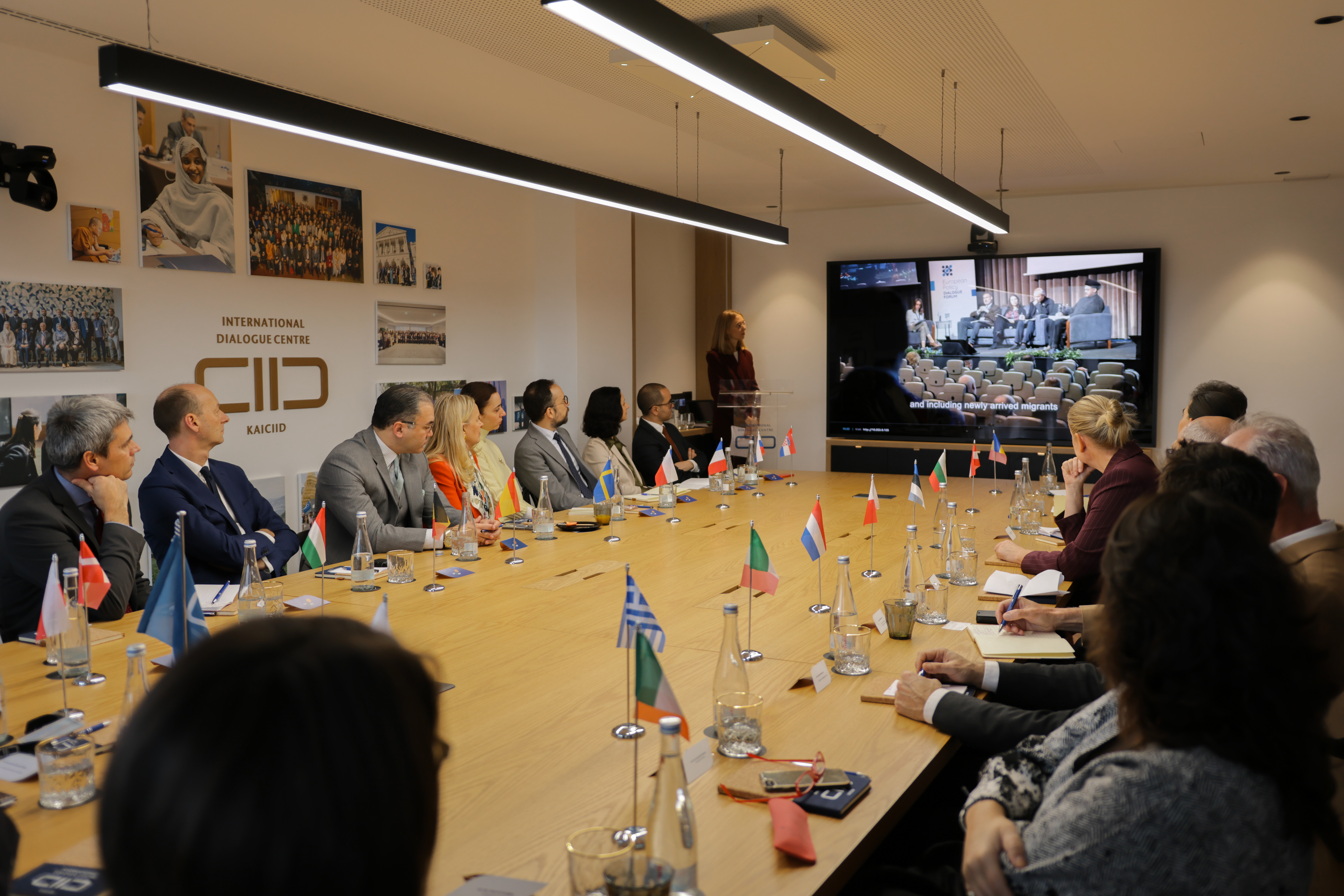
The roundtable also showcased examples of how dialogue translates into action at community level. At a time when antisemitism and anti-Muslim hatred are rising across Europe, the Muslim-Jewish Leadership Council brings together senior Muslim and Jewish leaders to stand publicly together. Participants heard about the MJLC Ambassadors Programme, where young leaders such as Hind and Eidel work side by side to counter antisemitism and anti-Muslim hatred. With the support of KAICIID and mentorship from senior religious leaders, an Imam and a Rabbi, they launched the “Yalla” project, visiting schools together and speaking out jointly against hatred. Their work models what it means to defend each other’s dignity across differences, grounded in a shared message: that one community’s pain does not cancel another’s, that identity need not be a threat, and that complexity can be held without surrendering to division. Similar youth ambassadors are active across Austria, Bosnia and Herzegovina, Finland, France, Italy, Germany, and Poland, demonstrating what convergence around shared ethical responsibility looks like in practice.
Through initiatives such as the Network for Dialogue, active in 12 European countries, KAICIID also works with migrants, refugees, and host communities to reframe diversity as a resource rather than a challenge. The network supports local actors in recognising newcomers not as problems to be solved, but as individuals bringing knowledge, skills, and perspectives that can strengthen social cohesion.
At policy level, participants were introduced to KAICIID’s Parliamentary Talks, which convene parliamentarians and policymakers at the European Parliament and the Parliamentary Assembly of the Council of Europe alongside religious leaders and faith-based actors. These structured exchanges provide space to reflect on social inclusion, freedom of religion or belief, hate speech, and environmental responsibility, strengthening cooperation between institutional and community-based actors. The exchange also highlighted KAICIID’s European Policy Dialogue Forum, which brings together policymakers, faith-based actors, and civil society around shared ethical foundations, helping bridge European policy priorities with lived community realities. Last year in Geneva, those conversations were distilled into the EPDF Call to Action, clustered around three clear and interconnected priorities: People, Planet, and Prosperity.
KAICIID and participating delegations expressed interest in continuing the exchange on how dialogue tools and approaches can contribute to prevention, peaceful coexistence, and inclusive communities in Europe and beyond.
An inaugural roundtable between two intergovernmental organisations headquartered in Lisbon opens the way for closer…
Between 2022 and 2025, The International Dialogue Centre trained over 75 ASEAN officials and diplomats in interreligious…
At KAICIID’s Lisbon headquarters, heads of mission of the GRULAC Diplomatic Corps and the Centre’s leadership discussed…