Five Years On: In Mauritania, dialogue takes root in classrooms, theatres and community networks

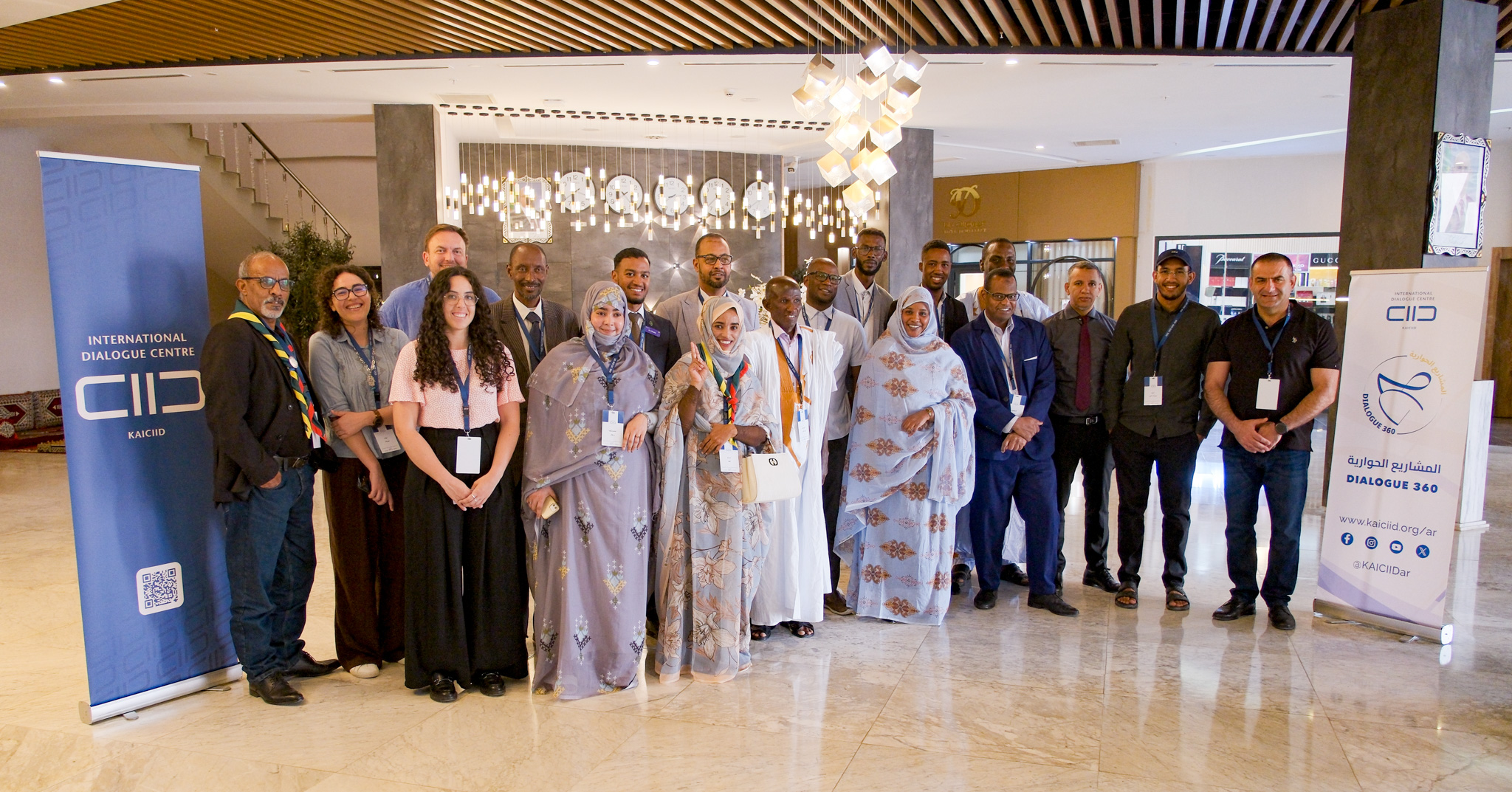
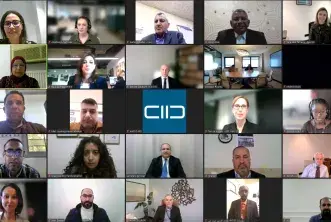
KAICIID Dialogue360 Monitoring & Evaluation Mission | Nouakchott, Mauritania | May 2026
When Mauritanian civil society organisations gathered in Nouakchott for the third Dialogue360 monitoring and evaluation mission, the question before them was not only what had been implemented. It was what had remained.
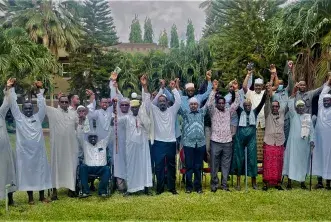
Across two days on 23–24 2026, organisations supported through Dialogue360 reviewed initiatives carried out between 2020 and 2025, covering migrant inclusion, citizenship education, social cohesion, countering hate speech, youth engagement and dialogue within educational and religious settings. Behind the presentations were practical stories of people working with migrant children, teachers, students in traditional schools, community leaders, social media activists and organisations trying to hold communities together in changing social contexts.
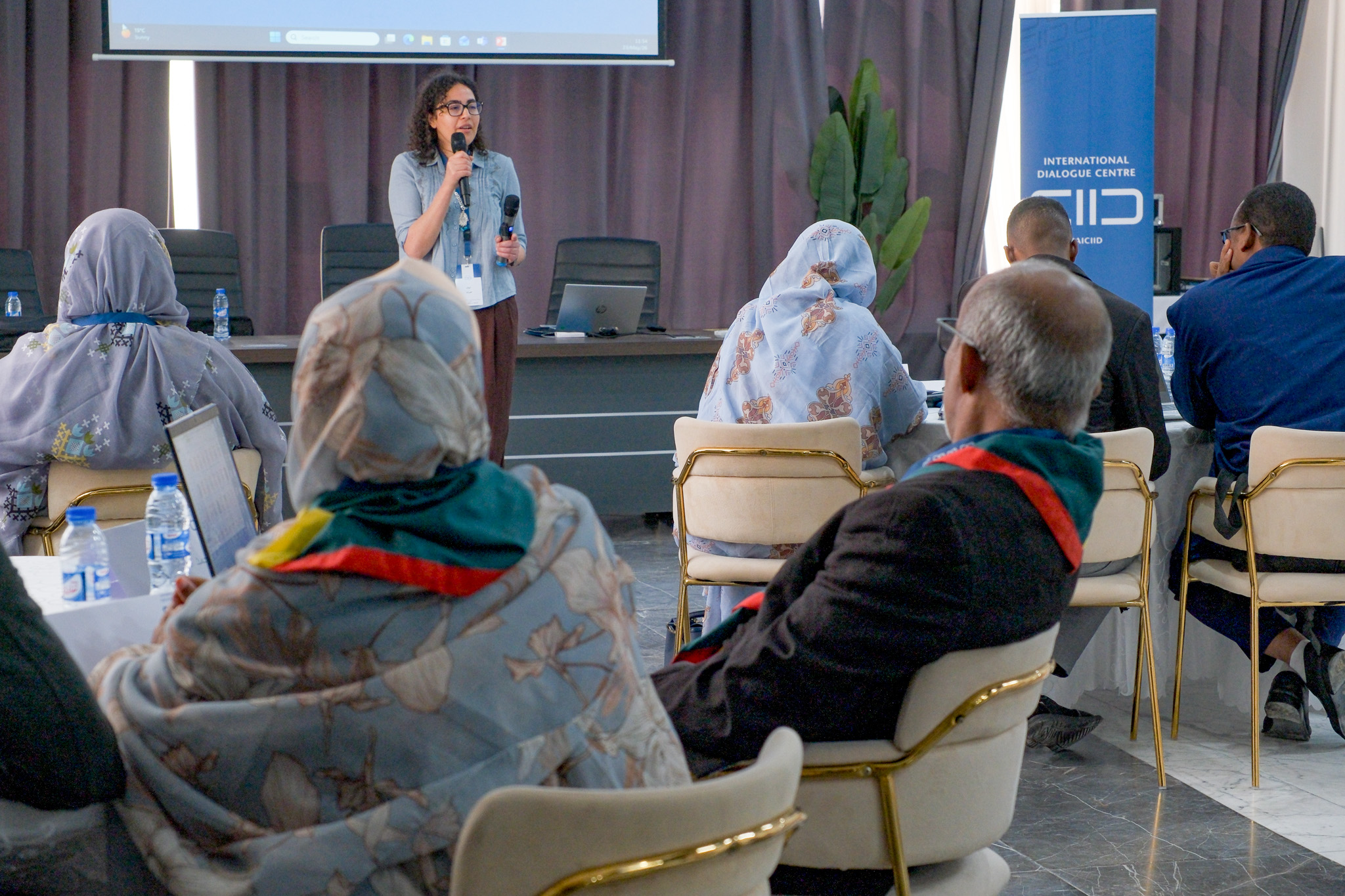
The mission brought together partners to assess how dialogue approaches had been applied in real community settings, what impact they had generated, and how cooperation could be strengthened in the future. It also opened a wider conversation on how civil society actors in Mauritania can continue to use interreligious and intercultural dialogue to address discrimination, migration pressures and social cohesion challenges.
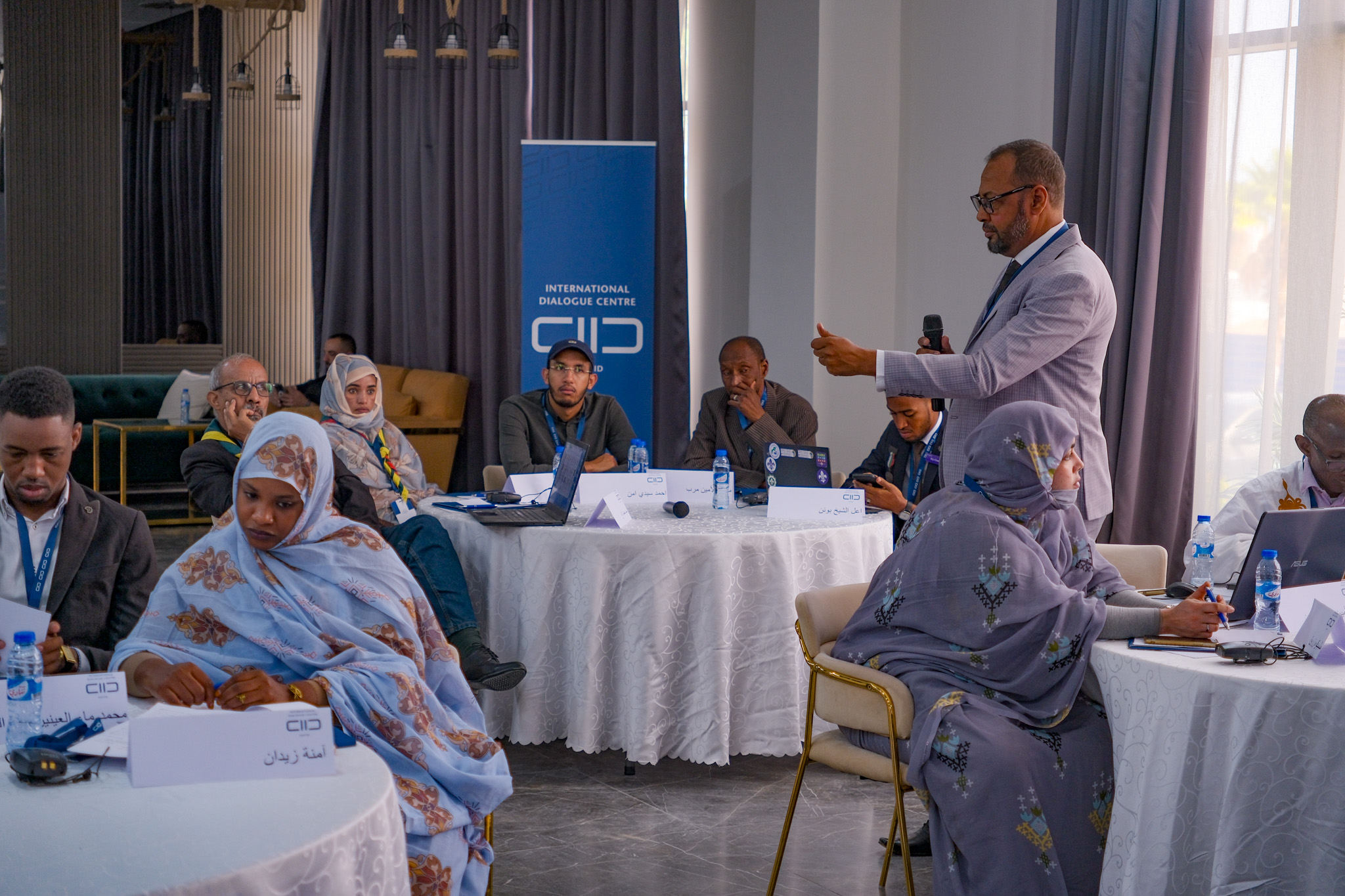
Dialogue360 is built on the premise that lasting social cohesion is most effectively strengthened by local actors who understand the realities, needs and aspirations of their own communities. Rather than implementing projects directly, the programme supports civil society organisations, educators, religious actors and community leaders in designing locally owned initiatives that respond to context-specific challenges. In countries such as Mauritania, where migration, ethnic and cultural diversity, and evolving social dynamics require tailored responses, this approach enables dialogue to emerge from within communities themselves. By investing in local capacities, partnerships and networks, Dialogue360 not only supports individual initiatives but also helps build a sustainable foundation for peaceful coexistence and resilience that can continue long after individual projects have ended
A practical response to vulnerability
Several of the initiatives reviewed focused on migrants and refugees, particularly in Nouadhibou, a city described by participants as an economic hub and gateway that attracts migrants from several African and Asian countries, as well as refugees from countries facing internal instability.
During the COVID-19 pandemic, the Association of Literacy Volunteers implemented “Together to Protect Migrants and Refugees from the Spread of COVID-19”, an initiative that sought to reach groups at risk of being left out of public health information and support. The organisation reported distributing 2,000 awareness leaflets, 2,000 masks and 1,000 bottles of sanitiser, while also organising radio awareness activities and meetings with representatives of migrant communities.
The same organisation later partnered with the Mauritanian Scouts and Guides Association in Nouadhibou on “Through Solidarity and Brotherhood, We Succeed in Confronting Corona”, an initiative that built on the earlier response and focused on migrant and refugee communities, vulnerable families and local migrant organisations. The project reported reaching 1,490 people against an initial target of 1,160, combining awareness raising, vaccination guidance and the distribution of protective materials.
What mattered in these initiatives was not only the distribution of materials. The organisations said the work helped reduce fear, improve access to information, and strengthen links between migrant communities, local organisations and public actors. In that sense, emergency response became an entry point for trust building.
Children at the centre of social cohesion
Other initiatives placed children and young people at the centre of the work. Vision of Youth Organization, in partnership with the Youth Theatre Enthusiasts Association, presented an initiative on the right of migrant children to education through theatre techniques. The project trained 80 children in dialogue and citizenship, brought children from different nationalities into shared activities, and used theatre to challenge negative stereotypes.
A separate initiative, implemented by the Association of Development Volunteers and Health Education in partnership with the Mauritanian Scouts and Guides Association and the Mauritanian Organization for Maternal and Child Health, focused on promoting citizenship and peace among migrant children through education. Implemented in Nouadhibou between March and June 2024, it targeted migrant children, Mauritanian children and teachers working in migrant schools. The initiative trained 10 teachers, supported 130 children academically, and distributed school materials to 80 children.
These projects show why education was repeatedly discussed during the mission as more than a service. It was presented as a space where children learn whether difference is a source of fear or a normal part of shared life. By bringing migrant and host community children into the same learning and cultural spaces, the initiatives sought to reduce isolation and strengthen peaceful coexistence from an early age.
Taking dialogue into traditional schools and online spaces
The mission also reviewed initiatives addressing hate speech, extremism, and social unrest in spaces where public attitudes are shaped.
The Mauritanian Scouts and Guides Association in Nouadhibou, in partnership with the Association of Development Volunteers and Health Education, presented work on combating hate speech and extremism among students in traditional schools (katatib or Hahadir). Implemented between April and July 2023, the initiative targeted students, teachers, and religion educators. The organisation reported reaching 302 participants overall, including training for 20 traditional schoolteachers and awareness activities for students. The initiative helped introduce values of tolerance into teaching spaces and encouraged recognition that hate speech must be openly addressed.
The Human Capacity Support Association presented another initiative focused on educating Mauritanian students on the importance of interfaith dialogue. Targeting youth, women and traditional school students aged 15 to 20, the project reported 170 direct beneficiaries and focused on moderation, tolerance, social peace and acceptance of difference.
At the same time, the Sahel Foundation’s “What Brings Us Together” initiative showed how far a dialogue campaign can travel once it leaves the page. Launched to counter discrimination, racism, inequality, corruption and divisive rhetoric circulating on Mauritanian social media, the campaign combined an orientation dialogue meeting, interactive online content and a virtual conference on social cohesion, mobilising more than 5,000 people across social media platforms. What followed went well beyond the campaign's own channels: social cohesion became a recurring theme in the national electoral campaign; a demonstration against hate speech was held outside Parliament in June 2023; the government issued a public call for national unity; and state television and radio ran extended programming on national cohesion. Few of the initiatives reviewed during the mission offered as clear a line from an online campaign to a national conversation.
From projects to a national platform
A recurring message across the presentations was that dialogue cannot remain an occasional activity added to projects. Participants discussed how interreligious and intercultural dialogue could be better integrated into institutional mandates and programming, especially in work linked to migration, discrimination, youth engagement, education, and community resilience.
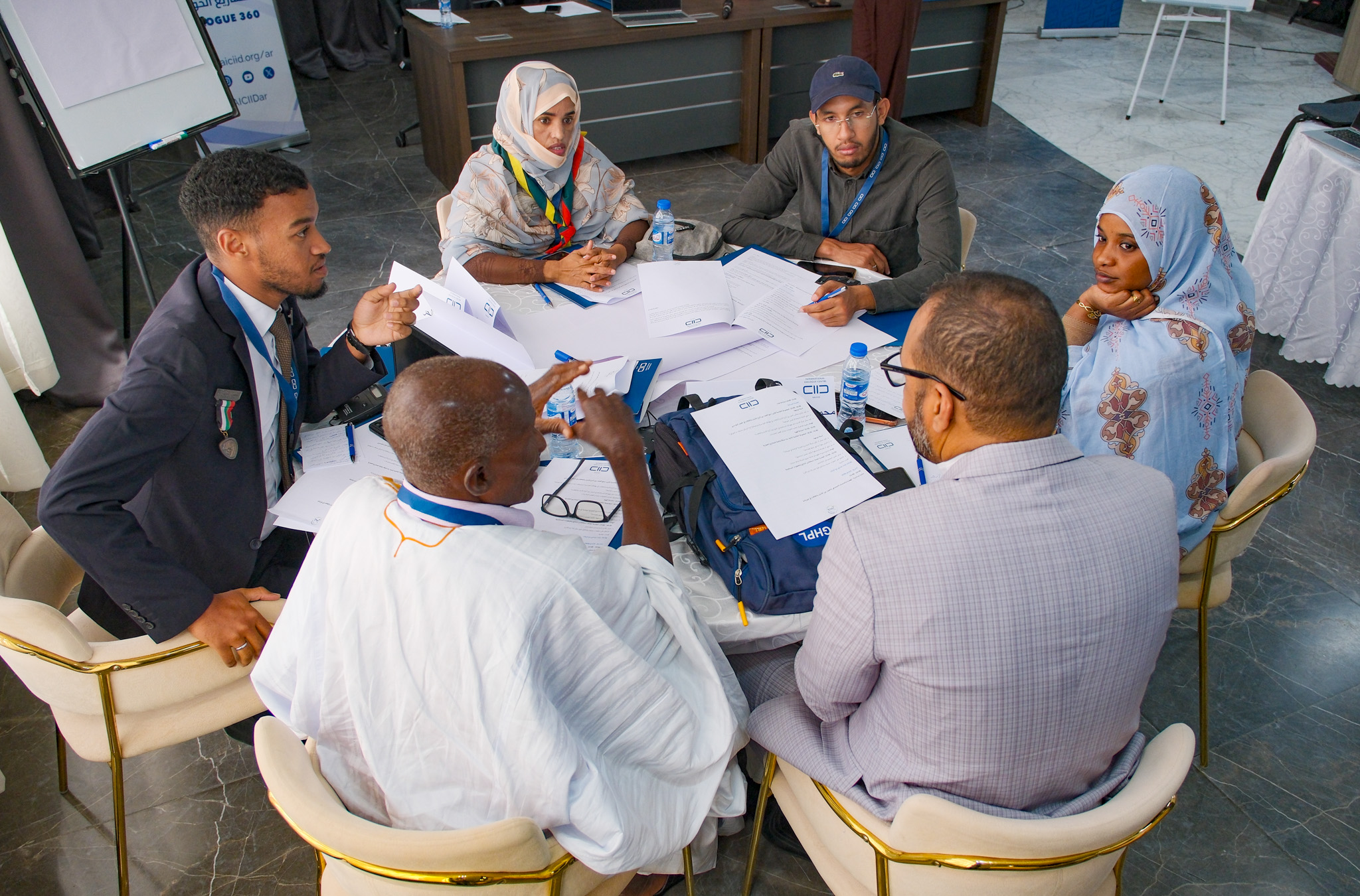
The mission also included a focus group on the potential creation of a national Dialogue360 network in Mauritania. Participants discussed what such a network could look like, how it could be coordinated, and how it might support cooperation among organisations working on dialogue and social cohesion.
The value of such a network would be practical. It could help organisations exchange experiences, coordinate future activities, learn from each other’s methods and build stronger partnerships with local authorities, educators, religious actors, and community leaders.
The evaluation mission made clear that Dialogue360 supported more than a set of short-term activities. In Mauritania, it helped local actors test dialogue as a working method in schools, communities, religious education spaces, migrant support structures and online platforms.
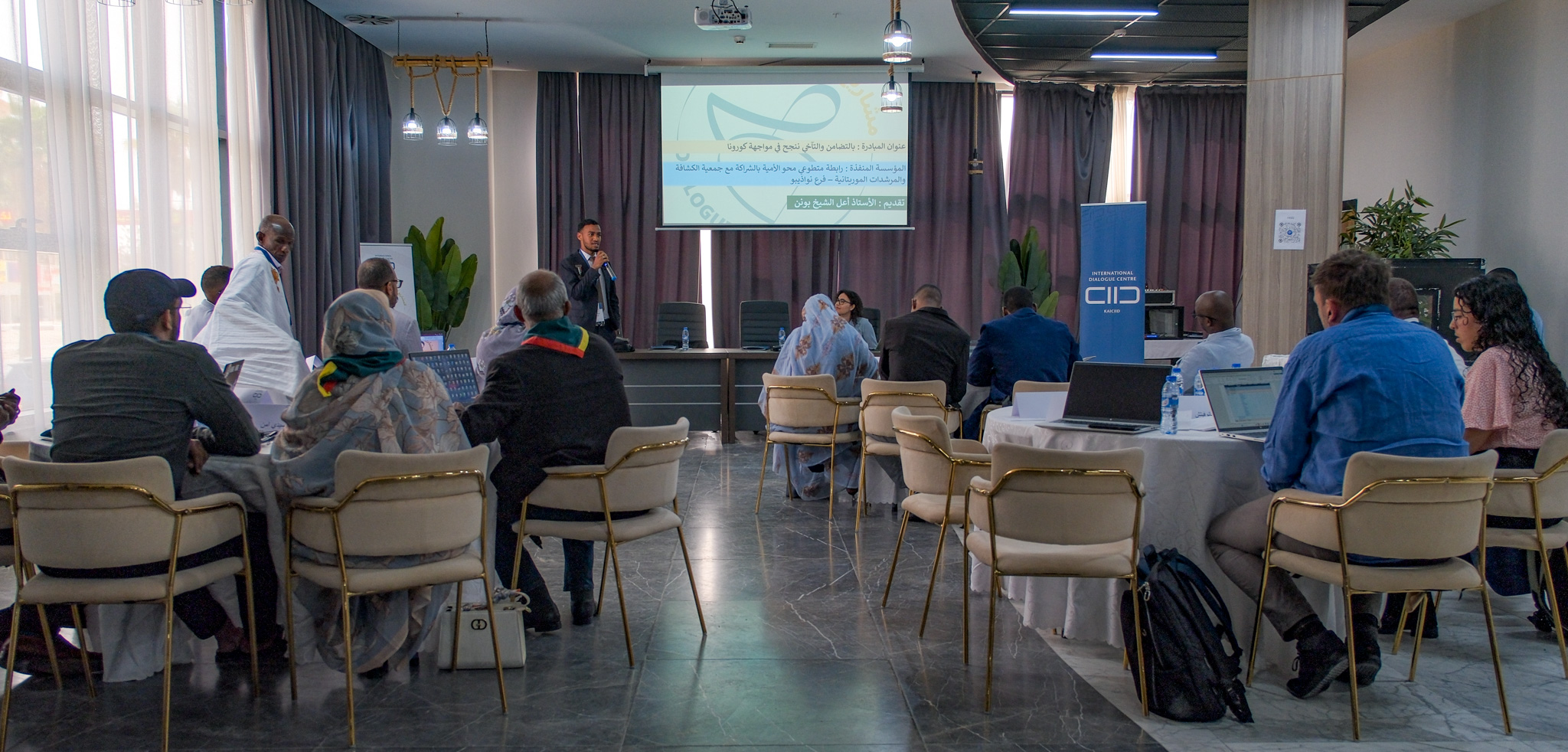
The next question is whether these efforts can be sustained, connected, and scaled. The organisations involved have shown that dialogue can help people navigate differences in concrete ways. What they now need is continued cooperation, stronger visibility, and mechanisms that allow local experience to inform wider national approaches to social cohesion.