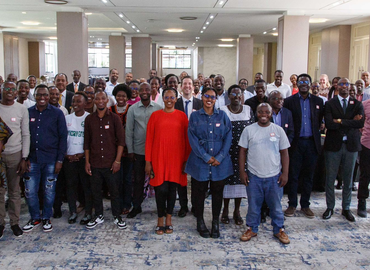
When violations go unseen: How monitoring freedom of religion or belief is helping protect vulnerable communities in Nigeria

In Nigeria, violations of freedom of religion or belief do not always begin with violence. Sometimes they begin quietly, in a classroom, in a village square, or in a neighbourhood where one community learns, slowly and painfully, that its faith places are at peril.
A student is denied an opportunity because of their name. A woman is told what she can or cannot wear. A young person hides their identity to avoid rejection. A family chooses silence because speaking up feels too risky. A community is prevented from building a place of worship. Over time, these experiences send a clear message: some rights are conditional and some voices carry less weight.
These experiences often are undocumented. They are endured privately, explained away, or absorbed into everyday life as if they are the status quo. That is what makes monitoring freedom of religion or belief so important. Before institutions can respond, before policy starts to conceive a potential shift, violations must first be documented, understood and taken seriously. Without documentation, there can be no accountability, no informed policy response, and no meaningful effort to rebuild trust. That reality plays out in one of Africa’s largest and most complex societies. It is estimated that Nigeria’s population reached 232.7 million people in 2024, across 36 states, the Federal Capital Territory and almost 800 local government areas. Questions of religious identity and belonging carry a tangible national weight. With current figures drawn from survey-based estimates, Nigeria has not published a recent official census breakdown by religion. Using Nigerian Demographic and Health Survey data, the Pew Research Center estimates that 56.1% of Nigerians are Muslim, while 43.4% are Christian and 0.6% belong to other religious groups. This diversity is one of Nigeria’s defining strengths, but where rights are asymmetrically protected, it can also become a fault line.
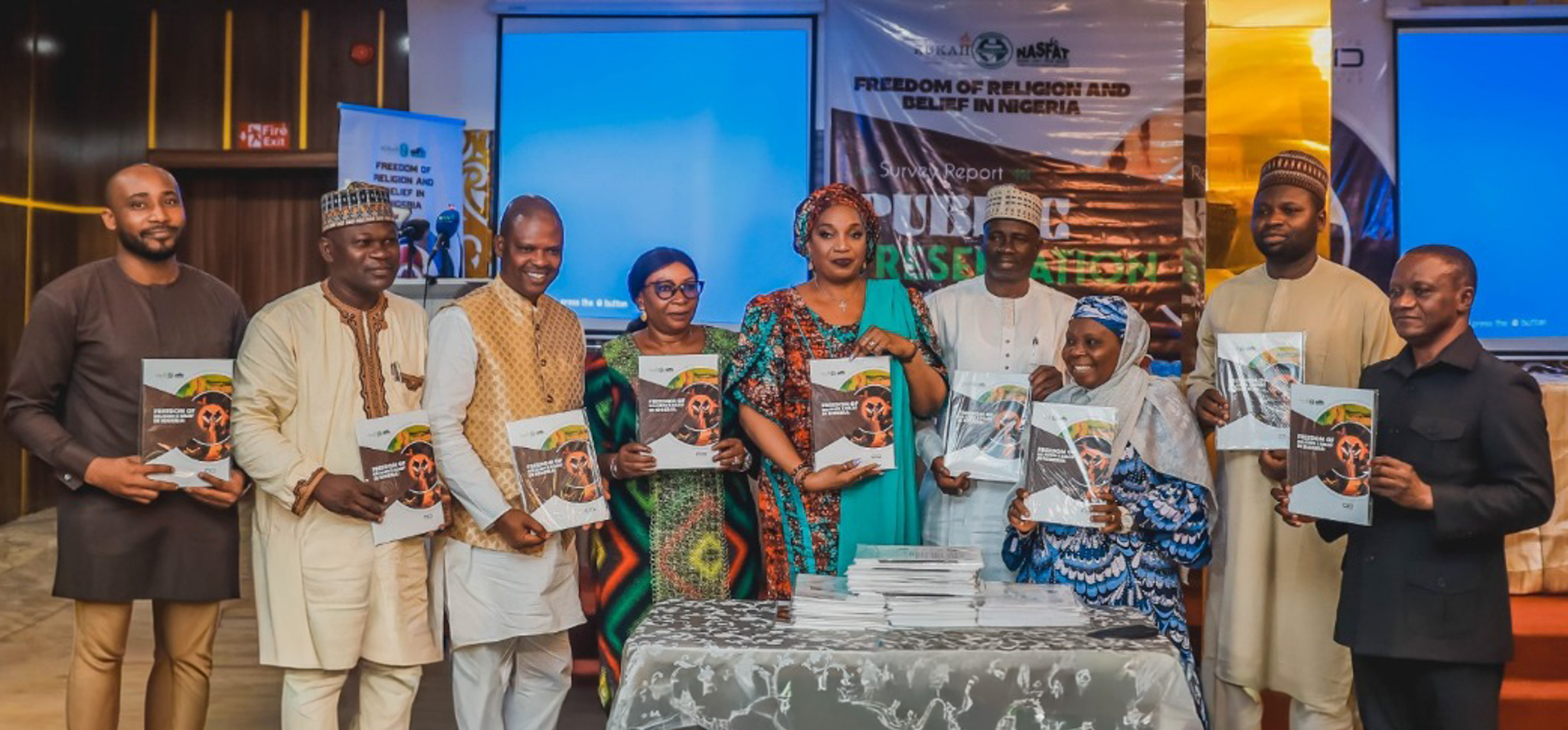
This is the premise behind a KAICIID-supported project implemented in partnership with the National Human Rights Commission of Nigeria (NHRC), The Kukah Centre (TKC), a Christian faith-based organisation, and Nasrul-Lahi-il Fathi Society (NASFAT), a Muslim faith-based organisation, to implement a monitoring mechanism for violations of freedom of religion or belief in areas where minority religious communities face discrimination. At its core, the project is not only about gathering evidence. It is about ensuring that people whose experiences are often ignored, no longer remain invisible.
The initiative has thus far achieved two phases. The first, concluded in 2024, surveyed six Nigerian states, Kano, Sokoto, Plateau, Edo, Ebonyi and Osun, to identify patterns of offense, the conditions that enable them and gaps in protection. The second phase moved from broad mapping to evidence-based monitoring of actual breaches in two states: Kano in the north and Ebonyi in the south. Using a hands-on approach, the monitoring drew on key informant interviews, questionnaires, media reports and documented incidents to examine root causes, consequences, actions taken and outcomes.
What emerged from the survey phase across the six states was not a story confined to one religion or one region. It painted a wider picture of how religious differences, when politicised or inadequately managed, can become a ground for discrimination, exclusion and fear.
In Kano, the findings revealed both interreligious and intrareligious tensions. Christian minorities described barriers to public service employment, access to infrastructure and freedom of worship, while internal divisions between Sunni and Shi’ite groups also exposed how violations can occur within religious communities themselves. For some respondents, the issue was not only open hostility but the deeper, structural reality of exclusion, where minority communities felt cut off from public opportunity and equal treatment.
In Ebonyi, the pattern was different but equally severe. Muslim minorities described pressure to conform to cultural practices that conflict with their faith, restrictions around worship, hostility toward visible religious identity, and in some cases, violence. One testimony recalled the destruction of a mosque in Awutu-Eda in 2021 during a period of heightened tension. Other accounts reflected quieter but deeply harmful forms of discrimination, including pressure to conceal one’s religion to gain family or community acceptance.
What makes these case studies powerful is not only the severity of individual incidents, but the pattern they reveal. These cases illustrate that violations are not limited to acts of violence. They also occur in everyday situations when individuals are denied opportunities, face social pressure, or are forced to compromise their identity. Such patterns emphasise the need to look beyond visible incidents and address underlying inequalities.
This is where the project’s approach becomes crucial. By working through local faith-based and partners, it has created a structure that is both credible and practical. The Kukah Centre and Nasrul-Lahi-il Fathi Society were selected because of their key role within Christian and Muslim communities, respectively, while the National Human Rights Commission provides an institutional pathway for documenting violations, compiling reports and generating policy recommendations for government stakeholders. That structure matters because monitoring, on its own, is not enough. Evidence must be linked to institutions that can act on it. Monitoring leads to the design of community-based interventions and can feed policy formulation. For vulnerable communities, the difference between silence and protection often lies in whether there is a credible mechanism capable of listening, recording and elevating their concerns into policy and public attention. The next steps of implementation are hinged on community and policy integration. The solid evidence base developed will shape concrete actions in Ebonyi and Kano State.
The next layer of impact lies in what happens after the monitoring; from impact at the community level, to policy tailored Radio jingles that have already been aired to raise awareness. Policy briefs, advocacy visits to individual and institutional stakeholders at state and federal levels, and town hall meetings, all will carry the findings to the public. The value of the project does not end with identifying violations. It lies in helping build an environment where these violations are recognised earlier, discussed more honestly and addressed more systematically.
In a country as large and complex as Nigeria, with its religious diversity, ethnic plurality and layered history of tension, no single intervention can solve the problem of religious discrimination. But this project shows that credible, locally rooted monitoring can lay out the groundwork for something essential: a more honest public understanding of where violations occur, who is most vulnerable, and what kind of response is needed to prevent them.
What makes this project significant is that it is no longer only documenting violations but helping build the conditions to prevent them. This is at the core of the work developed by KAICIID since its inception and something that has been evolving over the years. The skills developed among religious leaders, faith-based organizations, interfaith groups, along with government agencies has strengthened understanding of freedom of religion or belief, improved religious literacy and reinforced the importance of tolerance in a religiously diverse society. Through the public awareness campaign using radio and the next steps of policy briefs engagement, the project is shaping a Nigeria that is more alert to Freedom of Religion or Belief (FoRB) transgressions, more willing to confront them, and better equipped to protect the rights and dignity of all communities.
Public awareness through the radio
As part of the project’s wider outreach, partners also used radio to take the message on freedom of religion or belief beyond institutions and into everyday public spaces. The following jingle was developed to raise awareness, promote tolerance and encourage a shared commitment to peaceful coexistence.
Nigeria is a land of diversity and pride
Where over 200 million people reside
With 250 ethnic groups
And 400 languages too.
We have beautiful and rich culture,
But despite our richness, we face a test
Violation of freedom of religion and unrest.
Boko Haram and ISWAP are spreading fear and hate
We must stand together and create a more inclusive state.
We need legal reforms, interfaith dialogue too, and international cooperation to see this journey through.
Let's promote tolerance and respect for all
Regardless of faith or background we stand tall
Nigeria, a land of hope and unity
Where freedom of religion is the right for you and me
Let's work together to build a brighter day
For a Nigeria where all can thrive in peace and harmony
This message is brought to you by the National Human Rights Commission that spot TKC and KAICIID
For Michael Mounzatela, dialogue has never been abstract.…