
Before Judging, Understand


Giving up on tolerance is the costliest mistake our societies can make right now. And it is precisely the mistake we are making, almost without noticing.
You see it in traffic, on social media, in the supermarket queue. Above all, you see it in the way we debate what matters most: migration turned into a threat, climate change reduced to an ideological trench, multilateralism treated as a luxury for calmer times. Those who think differently are no longer opponents but enemies, and enemies are not listened to: they are accused and excluded. It is therefore worth asking an uncomfortable question: are we really becoming more tolerant, or do we merely defend tolerance as a principle, without practising it in the way we react to those who disagree with us?
In this climate, religion is once again viewed with suspicion. The accusation has roots: throughout history, faith has often served as a banner for conflict. But it would not be right to stop there. When conflicts drag on and institutions fail, it is often religious leaders who remain alongside the people and keep open channels that no one else can open. In the Central African Republic, in the midst of civil war, an archbishop, an imam and a pastor travelled the country together to prevent political violence from turning into a war of religions. They did not solve everything. But they showed that shared faith can defuse what politics has inflamed.
The same lesson is inscribed in the sources themselves. In June, experts from libraries and universities across Europe and the Arab world gathered in Lisbon to examine ancient manuscripts. What these documents reveal is a long history of encounter: texts translated from Greek into Arabic and from Arabic into Latin; Jewish, Christian and Muslim scholars reading, copying and commenting on one another's works; calligraphies that influenced each other. The civilisation we take pride in was born of that dialogue, not of isolation.
That is why interreligious dialogue is not an exercise in courtesy. It is a tool for peace. An agreement between governments can be torn up when the political cycle changes; trust built between communities that know each other is far more resilient. Without it, peace is merely a truce waiting for the next crisis.
To tolerate is not to give in or to relativise. It is not to renounce one's own convictions. It is to recognise in others the same dignity we claim for ourselves. The Declaration of Principles on Tolerance, adopted by UNESCO in 1995, calls it "harmony in difference". More than three decades later, the definition remains demanding and remains unfulfilled.
On this International Day for Tolerance, the choice is simple to state and difficult to practise: understand before judging, listen before accusing, include rather than exclude, and prefer humanism to the selfish and sectarian visions that are gaining ground today.
Giving up on tolerance would be the costliest mistake. There is still time not to make it.
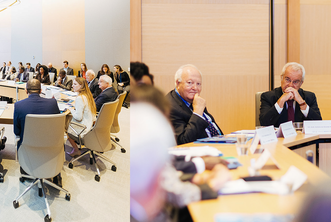
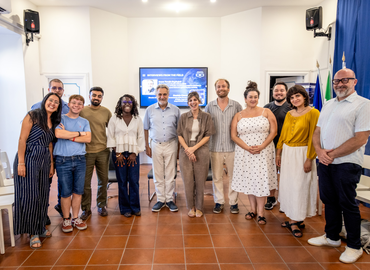
At the 5th ICCAR-UNESCO Youth…


Imagine Europe without the European Convention on Human Rights. No Court in Strasbourg to…