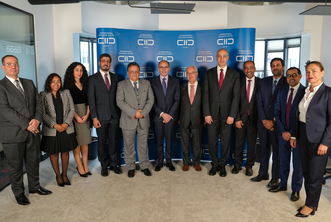
Latin American and Caribbean ambassadors meet KAICIID in Lisbon to explore dialogue-based approaches to peace and social cohesion

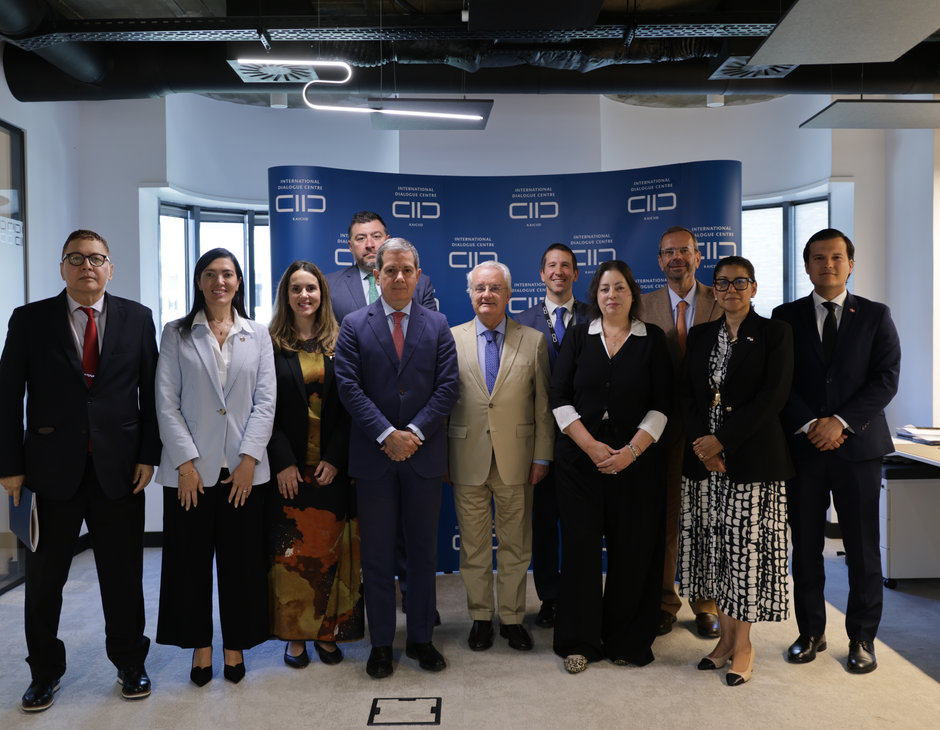
At KAICIID’s Lisbon headquarters, heads of mission of the GRULAC Diplomatic Corps and the Centre’s leadership discussed how interreligious and intercultural dialogue can complement diplomacy in responding to polarisation, exclusion, and identity-based tensions across the region.
Ambassadors and senior representatives of the Group of Latin American and Caribbean States (GRULAC) accredited to the Portuguese Republic gathered at the headquarters of the International Dialogue Centre – KAICIID on 20 May for a meeting on transformative dialogue approaches for peace and social cohesion.
The meeting, the latest in KAICIID’s Ambassadorial Dialogue series with diplomatic missions accredited in Portugal, was convened at the initiative of H.E. Ambassador Carlos Manuel Gil de Montes Molinari, Ambassador of the Republic of Peru. It offered the GRULAC diplomatic corps an opportunity to engage directly with the Centre’s leadership on its mandate, its work in Latin America and the Caribbean, and prospects for cooperation.
Dialogue as preventive diplomacy
Opening the meeting, KAICIID Acting Secretary-General H.E. Ambassador António de Almeida Ribeiro told participants that the global context, marked by rising polarisation, declining trust, and the growing instrumentalisation of identity, is putting cooperation among states and within societies under strain.
“Dialogue is no longer optional. It is a form of preventive diplomacy, a tool for social resilience, and increasingly a matter of collective responsibility.”
Ambassador António de Almeida Ribeiro, KAICIID Acting Secretary-General
Reflecting on his more than four decades in diplomacy, Ambassador Almeida Ribeiro told the GRULAC heads of mission that durable cooperation is built not only through formal negotiation, but through sustained human relationships and spaces for honest conversation. Religion and diplomacy, he said, though distinct, both hold the capacity to mobilise communities for the common good.
A growing engagement with Latin America and the Caribbean
Latin America and the Caribbean has become an increasingly important focus of KAICIID’s work. Following major convenings co-organised in Chile and Costa Rica in 2025, KAICIID has begun supporting structured, cumulative dialogue processes in the region that bring together Indigenous leaders, religious actors, policymakers and civil society.
The Centre’s 2026 regional programme places particular emphasis on social polarisation, the inclusion of Indigenous and Afro-descendant communities whose spiritual traditions are often excluded from formal policy dialogue, freedom of religion or belief, and the rise of hate speech. It is delivered through partnerships with the Organization of Ibero-American States (OEI), the University for Peace, Religions for Peace, Arigatou International and IPDAL, as well as through the active engagement of KAICIID Fellows who act as local anchors.
“Sustainable peace cannot be built solely through agreements between states. It must also be rooted in trust within societies.”
Ambassador António de Almeida Ribeiro, KAICIID Acting Secretary-General
From dialogue to practical cooperation
Following a presentation of KAICIID’s programmes, GRULAC ambassadors and KAICIID staff exchanged views on how dialogue-based approaches can complement diplomatic efforts on issues that cut across the region, including identity-based tensions, social cohesion, the protection of religious and cultural pluralism, and climate-related dialogue.
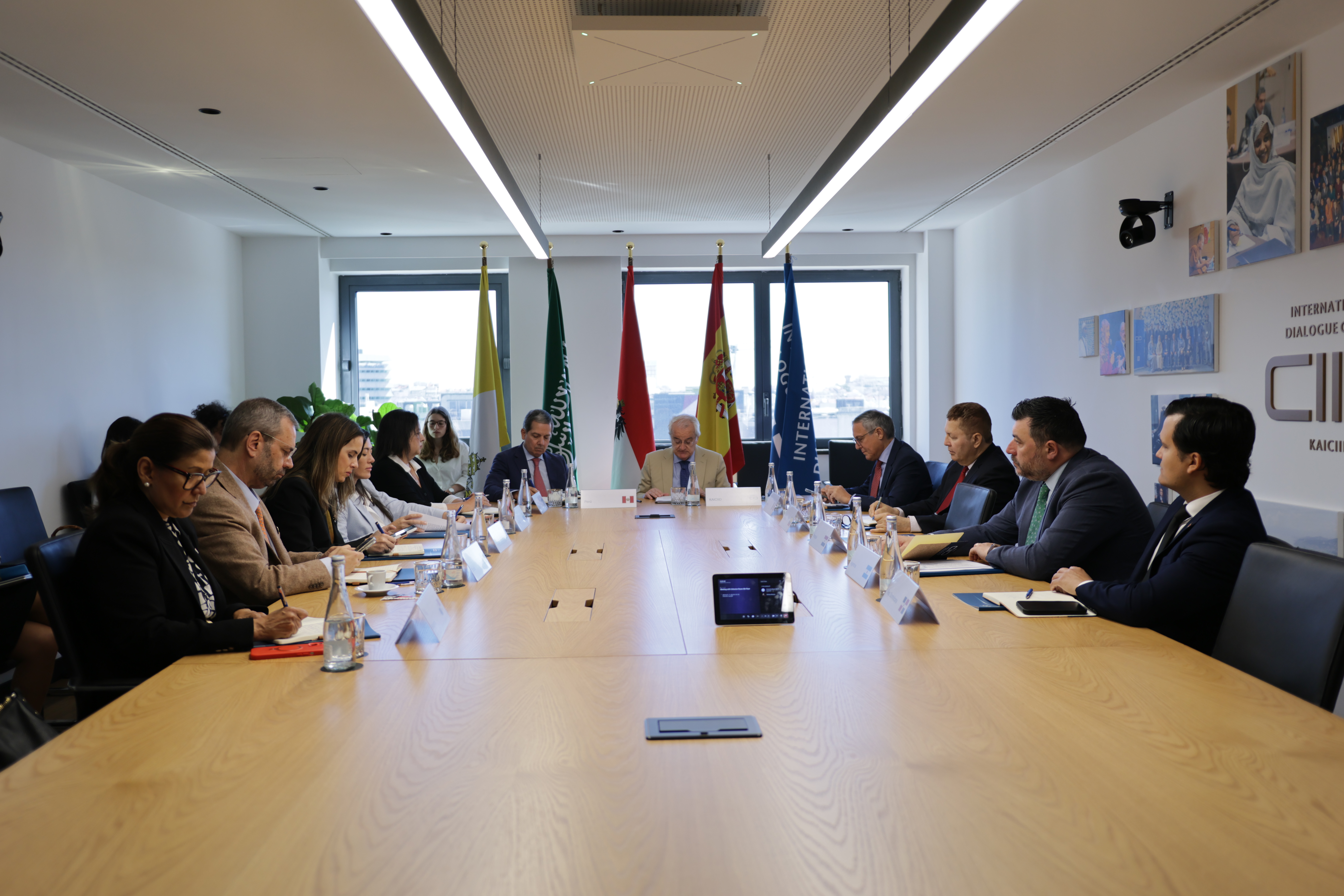
Speaking on behalf of the GRULAC embassies, H.E. Ambassador Carlos Manuel Gil de Montes Molinari welcomed KAICIID’s work and the recent Memorandum of Understanding with the Organization of Ibero-American States, and pointed to the Centre’s initiatives in Chile and Costa Rica as a strong foundation for continued cooperation. He noted that Latin America and the Caribbean, a region long spared interstate war, continues to face high levels of violence and rising hate speech, making peace education and dialogue all the more urgent.
“We have seen important initiatives in Chile and Costa Rica, which is highly commendable. Please count on our embassies in this shared effort.”
H.E. Ambassador Carlos Manuel Gil de Montes Molinari, Ambassador of the Republic of Peru
Closing the meeting, Ambassador Almeida Ribeiro said today’s discussion reaffirmed the indispensable role of diplomacy, while also reminding participants that diplomacy is most effective when supported by social cohesion, credible local partnerships, and inclusive leadership.
Strengthening ties with Portugal and the region
Today’s convening builds on the recent Memorandum of Understanding signed between KAICIID and the Organization of Ibero-American States (OEI), which provides a framework for joint work on dialogue, education, and youth engagement across the Ibero-American space.
Ambassador Almeida Ribeiro also noted that Portugal has been formally invited to join KAICIID’s Council of Parties, one of the Centre’s governing bodies, and welcomed the constructive engagement of the Portuguese Government in the ongoing process.
KAICIID indicated its readiness to continue working with GRULAC missions bilaterally and collectively to identify practical avenues for cooperation, including dialogue platforms, preventive engagement, capacity building, and knowledge exchange that strengthen resilience and peaceful coexistence in Latin America and the Caribbean.