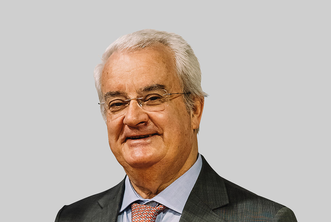

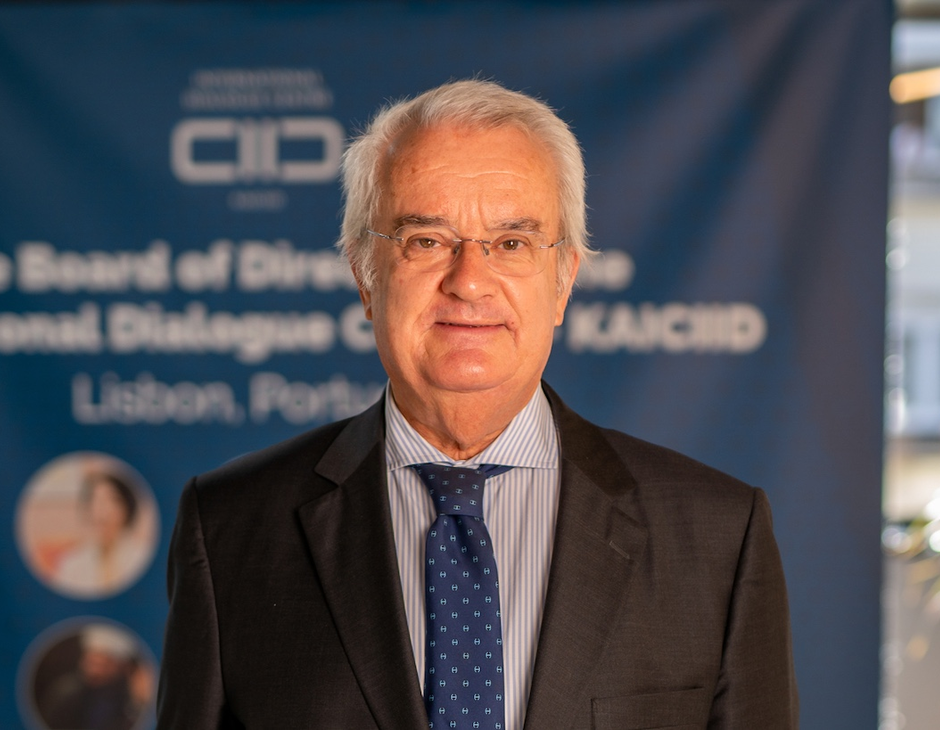
By Ambassador António de Almeida Ribeiro: Acting Secretary General: - KAICIID
We are living in times of immense global tension, marked by the outbreak of multiple conflicts. In this context, calls for responsibility, dialogue and diplomacy, which are essential for establishing truces, fostering harmony and negotiating peace can never be overstated. However, true peace requires that religions be an integral part of this process. Interfaith dialogue is not a mere accessory; it is a vital foundation for ensuring that peace agreements stand the test of time. For this very reason, targeting faith and religious institutions is a strategic and moral error. The recent denial of access to the Church of the Holy Sepulchre to a senior prelate of the Holy See, who was due to celebrate Palm Sunday there, constitutes a deeply reprehensible act. But even with the events we witnessed earlier this week, ten days prior, some 500 metres from the site, the Muslim community also found its access barred to the Al-Aqsa Mosque, where they were to celebrate Eid Al-Fitr and the end of the 30 days of Ramadan. The closure of the Mosque, widely described as unprecedented since 1967, constituted an incomprehensible moment of exclusion for Muslims in Jerusalem and around the world. Such restrictions would be unacceptable anywhere, but they take on a unique gravity in Jerusalem, the sacred cradle of the three great Abrahamic religions: Christianity, Islam and Judaism. If there is one place in the world where the defence of religious freedom and free access to places of worship must be uncompromising, it is precisely in Jerusalem. Because of the history it embodies. Because of the symbolism it exudes. Because of the global consequences that any rupture there would trigger. In times of conflict and fear, sacred sites have a duty to remain oases of prayer, reflection and peace. When access to them is blocked or restricted, the damage goes beyond the practical; these are moral and communal wounds that deepen mistrust and division, precisely when we most need dialogue and unity. Free access to holy places is, therefore, the guarantor of peaceful coexistence, mutual respect and the dignity of all communities. It is important to emphasise that this is not an isolated sentiment: recent restrictions in Jerusalem, in the United States of America and in the United Kingdom, including incidents at a synagogue in Michigan and the burning of ambulances belonging to a local Jewish support community in North London, have affected all three Abrahamic traditions, with Muslims, Christians and Jews facing unacceptable obstacles during their major religious celebrations, as well as in their daily lives. At a time when we increasingly need signs and examples of how peace can flourish, dialogue and inter-religious decisions affecting multiple communities can play a decisive role. The closure of the Church of the Holy Sepulchre and the Al-Aqsa Mosque undermine the fundamental principle that access to holy sites is a non-negotiable matter of rights, dignity and peace.
We find ourselves at a critical moment in history, which demands responsible action from all of us and the uncompromising defence of the dignity of every community of believers. Religious leaders are instrumental partners in the search for understanding, in uniting people and in building peace. It is therefore imperative that states and their diplomatic services understand the value of these institutions, strengthening ties with religion rather than weakening them.