
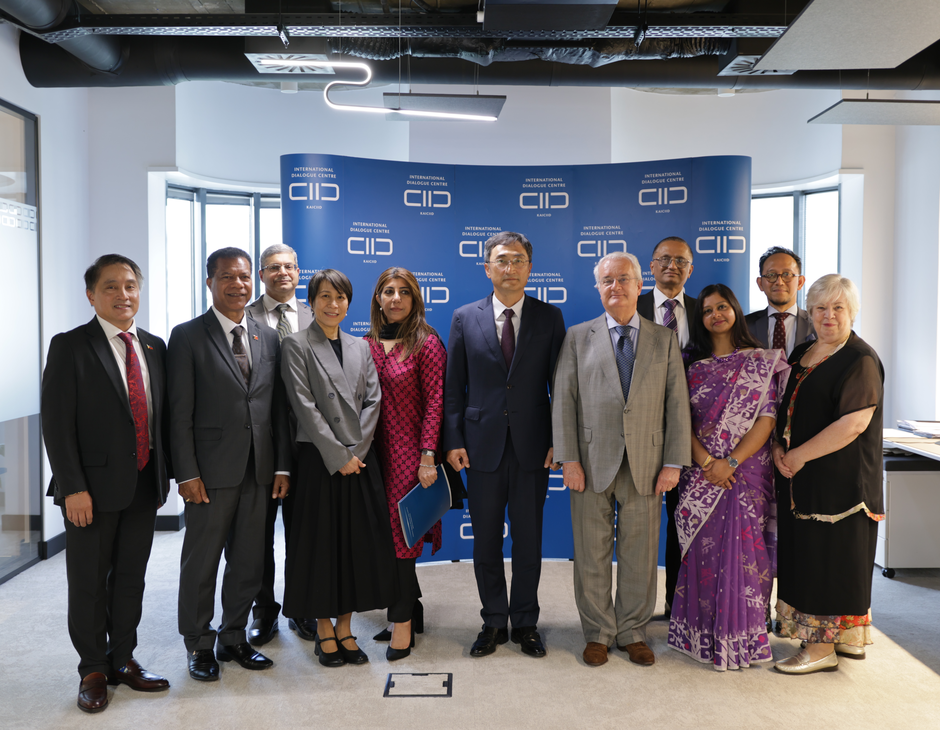
Between 2022 and 2025, The International Dialogue Centre trained over 75 ASEAN officials and diplomats in interreligious and intercultural dialogue, now convening the Heads of Mission of the Asian Group to chart joint priorities.
Hosted at International Dialogue Centre’s - KAICIID Headquarters in Lisbon, the Ambassadorial Roundtable with the Asian Diplomatic Corps accredited to the Portuguese Republic, opens a new chapter of structured engagement between the intergovernmental organisation and one of the world's most religiously and culturally diverse regions.
The Roundtable brought together ten Heads of Mission and senior diplomats from across Asia for a working exchange on the role of dialogue in advancing peace, social cohesion and inclusive development in the region. Speaking on behalf of the Asian Diplomatic Corps, Ambassador Cho underlined the unique relevance of dialogue to a region characterised by extraordinary religious and cultural diversity:
"Asia, in particular, is a region where diverse religions and cultures coexist. This diversity is a precious asset, and at the same time, a significant challenge that calls for our collective wisdom."
In his remarks, Ambassador Almeida Ribeiro situated the Roundtable within KAICIID's broader diplomatic engagement strategy, which has previously seen the Centre convene the Arab Region Diplomatic Corps in Lisbon in April 2025, the EU Diplomatic Corps in March 2026 and renew its Memorandum of Understanding with the African Union Commission in Addis Ababa last month.
"The challenges before us cannot be addressed by diplomacy alone, nor by community engagement in isolation. They require bridges between policy and society, between institutions and lived realities, and between state actors and the moral voices that help shape communities. We want to share these examples, that are creating digitally advanced ecosystems of dialogue, translating policy and change into action, so we can further work together in the region," he added.
With direct implementation in Thailand, Indonesia, the Philippines and Malaysia, and a Fellows-centred approach that leverages locally embedded dialogue practitioners, the KAICIID continues to position dialogue as a practical tool to address growing challenges across the region; including polarisation, declining trust, widening generational divides and climate-related pressures.
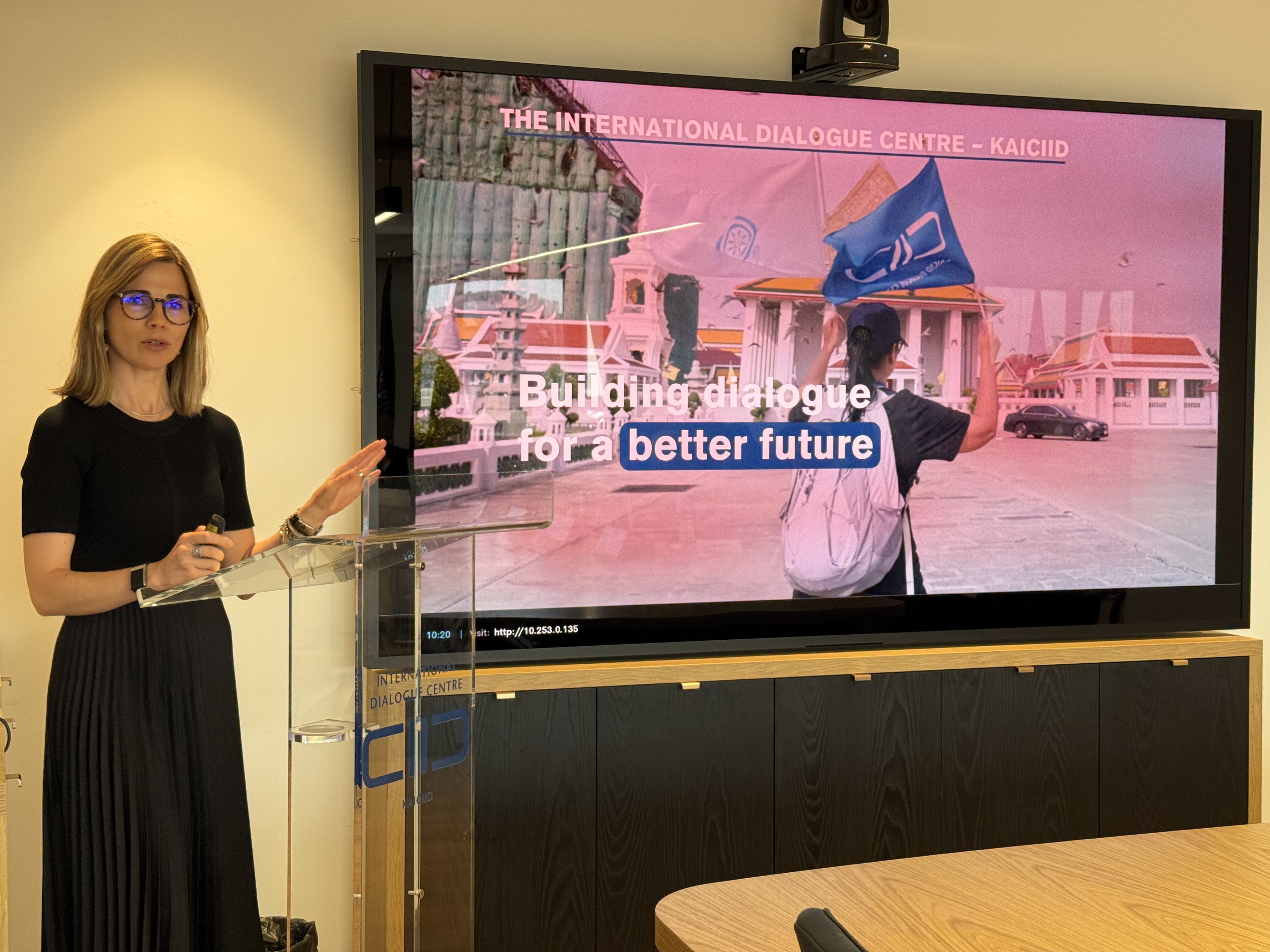
KAICIID presented a series of results that reflect its growing work across Southeast Asia, with a focus on regional cooperation and community-level action, to create an evolved ecosystem of dialogue to respond to local needs. This includes Ruang Riung, an arts-based dialogue initiative in Yogyakarta and Jakarta, which engaged more than 100 religious leaders, reached over 2,600 participants in person and connected with a digital audience of more than 750,000.
Between 2022 and 2025, KAICIID worked with the ASEAN Institute for Peace and Reconciliation to train more than 75 ASEAN officials and diplomats in dialogue-based approaches to policymaking and regional cooperation.
KAICIID also supported 45 youth leaders from seven ASEAN Member States in 2025, equipping them with skills in intercultural dialogue, storytelling and digital engagement, having led to 12 grassroots initiatives, reaching more than 300 people in local communities.
The Centre has also advanced the Dialogue Cities Network, connecting five pilot cities across Southeast Asia with knowledge sharing and best practices. The network brings together academics, journalists, policymakers, religious leaders, women and youth to strengthen dialogue for peacebuilding and social cohesion.
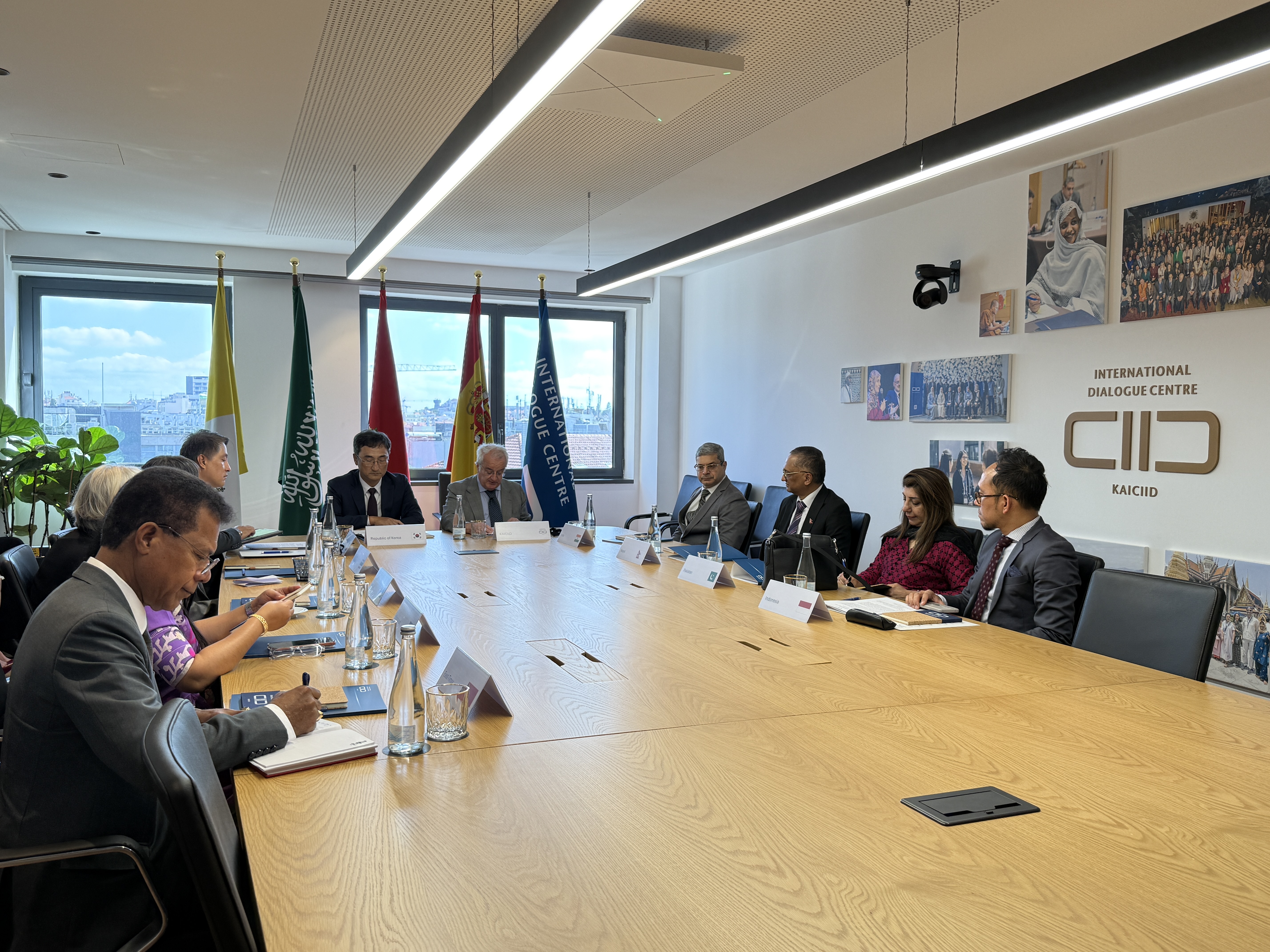
Discussions during the interactive segment focused on shared priorities including polarisation and the erosion of social trust, the role of dialogue in addressing generational divides, the prevention of hate speech and disinformation in digital spaces, and the contribution of dialogue to community-led climate action and inclusive policymaking.
KAICIID's Asia Programme works in partnership with regional bodies including ASEAN-IPR and UNDP Philippines, and with faith-based and civil society partners including the Network for Religious and Traditional Peacemakers, Religions for Peace, the International Partnership on Religion and Sustainable Development (PaRD), the International Network of Engaged Buddhists, Arigatou International, the International Civil Society Action Network (ICAN) and Al Qalam Institute. Convened in alignment with the United Nations International Year of Peace and Trust, the Roundtable reaffirmed the relevance of multi-stakeholder dialogue in addressing today's complex challenges.